
ISA Tax Impact Calculator for U.S. Citizens
Calculate the net cost of holding an ISA as a U.S. person, factoring in IRS capital gains taxes and cross-border compliance fees.
Results Breakdown
- Capital Gains (USD): $0.00
- IRS Tax Liability: $0.00
- Compliance Costs: $0.00
- Total Net Cost to You: $0.00
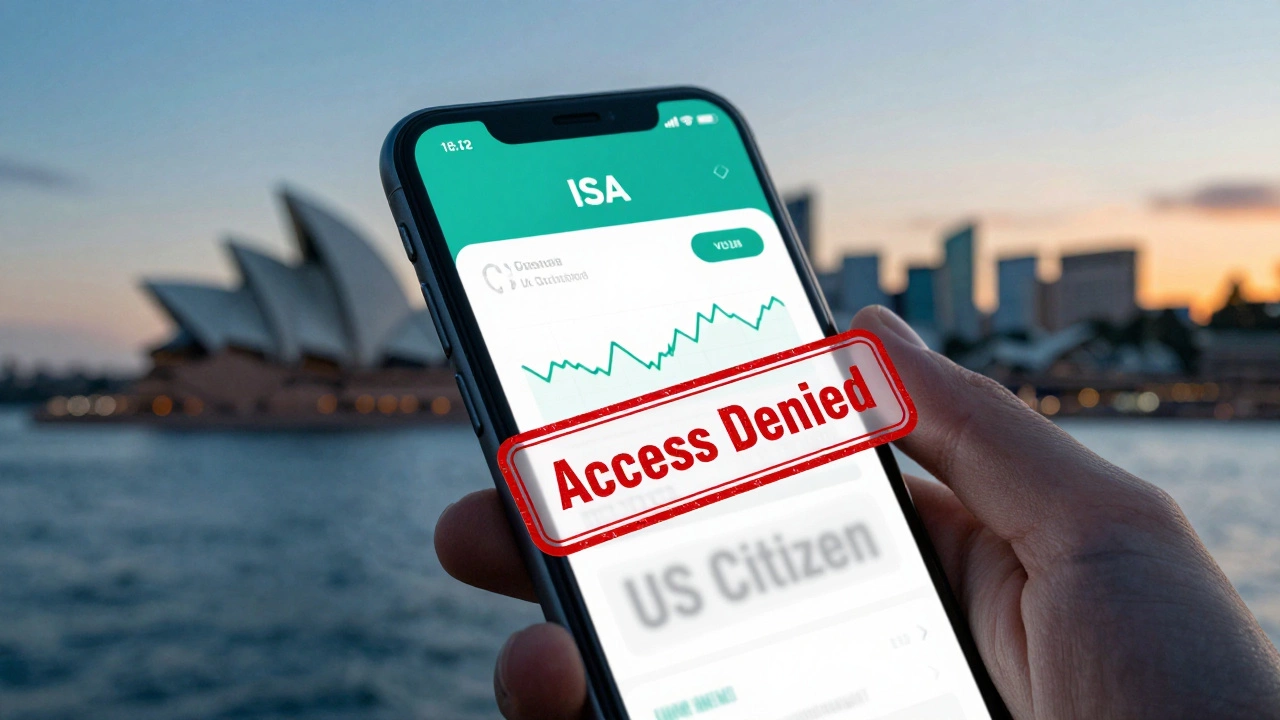
Imagine you are a Landon Ainsworth living in Sydney, looking at the sleek interface of a UK-based brokerage app. You see the promise of tax-free growth on stocks and bonds through an Individual Savings Account (ISA). It sounds too good to be true, especially if you are paying high capital gains taxes back home in the United States. But here is the hard truth: just because the account exists doesn't mean you can open one.
If you are a U.S. citizen, the short answer is usually no. You cannot simply walk into a UK bank or click "sign up" on most major platforms to get an ISA. The reasons aren't just bureaucratic; they involve complex international tax treaties, strict reporting requirements, and the unique way the United States taxes its residents worldwide. Let’s break down why this door is closed, what happens if you try to force it open, and where you should actually put your money instead.
The Golden Rule: Residency Matters More Than Citizenship
To understand why you are locked out, we first need to look at who the ISA was built for. An Individual Savings Account (ISA) is a UK-specific tax wrapper. It allows residents of the United Kingdom to save and invest money without paying income tax or capital gains tax on the profits. The key word here is resident.
UK financial institutions are required by law to ensure that anyone opening an ISA is UK tax resident. This isn't a suggestion; it's a legal mandate enforced by HM Revenue and Customs (HMRC). If you are not tax resident in the UK, you do not qualify. Being a U.S. citizen does not automatically make you a UK resident. In fact, most U.S. citizens live in the United States, making them non-residents for UK tax purposes.
Even if you live in the UK, your U.S. citizenship creates a separate layer of complexity. The United States taxes its citizens on their worldwide income, regardless of where they live. This means that while the UK might say your ISA earnings are tax-free, the IRS says otherwise. This conflict is the primary reason why brokers block U.S. persons from accessing these accounts.
Why Brokers Block U.S. Citizens: The FATCA Factor
You might wonder, "Why won't they just let me open the account and pay my own taxes?" The problem lies with a U.S. law called the Foreign Account Tax Compliance Act (FATCA). Passed in 2010, FATCA requires foreign financial institutions (FFIs) to report any accounts held by U.S. persons to the Internal Revenue Service (IRS).
For a UK bank or broker, complying with FATCA is expensive and administratively heavy. They have to verify your status, file annual reports, and potentially withhold taxes if you don't provide the right documentation. Many smaller UK firms simply decide it's not worth the hassle. They categorize U.S. citizens as "high-risk" clients and decline service entirely.
Furthermore, even large banks that do accept U.S. clients often exclude specific products like ISAs. Why? Because an ISA is a tax-advantaged product designed for UK residents. Allowing a non-resident U.S. citizen to use it could create a loophole that violates the spirit of the UK tax code and triggers audits from HMRC. So, the broker blocks you to protect themselves from regulatory fines on both sides of the Atlantic.
| Criteria | UK Resident (Non-US) | U.S. Citizen Living Abroad | U.S. Citizen Living in US |
|---|---|---|---|
| Eligible for ISA? | Yes | No (Usually) | No |
| Tax Treatment in UK | Tax-Free | N/A (Cannot Open) | N/A (Cannot Open) |
| FATCA Reporting Required? | No | Yes (If account allowed) | Yes (If account allowed) |
| IRS Tax Liability | N/A | Worldwide Income | Worldwide Income |
What If You Are a Dual National or Live in the UK?
Let’s complicate things slightly. What if you are a dual citizen (U.S. and UK) and you actually live in London? Does that change anything? Unfortunately, not much.
Even if you are physically present in the UK and meet the statutory residence test for UK tax residency, your U.S. citizenship still triggers FATCA obligations. Most UK brokers will still ask for your U.S. Taxpayer Identification Number (TIN) and Form W-9. Once they see you are a U.S. person, many will still deny you access to ISAs because the tax advantage is meaningless to you. The IRS will still tax those gains, so the "tax-free" benefit of the ISA vanishes for you personally.
Some larger global banks, like HSBC or Barclays, may have specialized desks for U.S. expats. However, they typically steer you toward standard taxable brokerage accounts rather than ISAs. They might offer you a "Global Custody Account" which functions similarly but lacks the specific tax wrappers of an ISA. You lose the tax shield, but you gain access to the market.
The Risks of Trying to Circumvent the Rules
I’ve seen people suggest creative workarounds, like using a spouse’s name or setting up a trust. These ideas are dangerous. Here is why:
- False Declarations: If you lie about your residency status to open an ISA, you are committing fraud against HMRC. If discovered, they can claw back all tax benefits, charge penalties, and close the account.
- IRS Penalties: If you hide the account from the IRS to avoid FATCA reporting, you face severe penalties under the Foreign Bank Account Report (FBAR) rules. The IRS has data-sharing agreements with over 100 countries, including the UK. They know about your account.
- Account Closure: Banks routinely audit accounts. If they realize later that you were ineligible, they will freeze and close the account, potentially leaving you in a difficult position to withdraw funds quickly.
The potential savings from avoiding capital gains tax rarely outweigh the risk of multi-thousand-dollar fines and legal headaches. Play it straight.
Better Alternatives for U.S. Citizens Investing Internationally
So, you can’t use an ISA. What do you do? Don’t panic. There are excellent alternatives that respect your status as a U.S. person while allowing you to invest globally.
1. Standard Brokerage Accounts
Open a standard taxable brokerage account with a firm that accepts U.S. clients. Many U.S.-based brokers like Fidelity, Vanguard, or Charles Schwab offer international trading capabilities. You can buy UK stocks, ETFs, and bonds directly. While you will owe capital gains tax in the U.S., you can often claim a Foreign Tax Credit if you paid any withholding taxes abroad, preventing double taxation.
2. Self-Directed IRAs
If you want tax advantages, look at U.S. retirement accounts. A Self-Directed IRA allows you to hold a wider variety of assets, including international real estate or private equity, though standard stock and bond IRAs are more common. The tax deferral (Traditional IRA) or tax-free growth (Roth IRA) benefits apply to your worldwide investments, provided the assets are held within the IRA structure.
3. Global ETFs and Mutual Funds
Instead of trying to replicate an ISA, buy diversified global ETFs available on U.S. exchanges. Funds like Vanguard Total International Stock ETF (VXUS) give you exposure to thousands of companies outside the U.S., including the UK. This is simple, compliant, and liquid.
4. UK Pensions (SIPP) for Residents
If you are a UK tax resident, you might consider a Self-Invested Personal Pension (SIPP). While also subject to FATCA, some providers accept U.S. persons for SIPPs because the tax treatment is different (tax relief on contributions). However, this is complex and requires expert advice to ensure it aligns with U.S. pension rules (like the PFIC rules).

Understanding the Tax Impact: It’s Not Just About the ISA
Let’s talk numbers. Suppose you could somehow open an ISA and earned £5,000 in capital gains. In the UK, that’s £0 tax. In the U.S., you would owe long-term capital gains tax, which is currently 0%, 15%, or 20% depending on your income bracket. For a middle-income earner, that’s 15%. On £5,000, that’s $750 owed to the IRS.
Now, add the administrative cost. To report this properly, you might need to file Form 8938 (Statement of Specified Foreign Financial Assets) and FBAR (FinCEN Form 114). If you hire a CPA to handle this cross-border complexity, expect to pay hundreds of dollars annually. The "tax-free" nature of the ISA becomes a net loss when you factor in U.S. taxes and compliance costs.
FAQ: Common Questions About U.S. Citizens and ISAs
Can I open an ISA if I am a U.S. Green Card holder?
No. Like U.S. citizens, Green Card holders are considered "U.S. persons" for tax purposes and are subject to FATCA reporting. Most UK brokers will treat you the same as a citizen and deny ISA eligibility due to residency and compliance issues.
What is the penalty for holding an ISA as a non-resident?
HMRC can demand repayment of all tax benefits received, plus interest and penalties. Additionally, if you failed to report the account to the IRS, you could face significant fines for FBAR violations, which can start at $10,000 per violation.
Are there any exceptions for U.S. citizens living in the UK?
Technically, if you are UK tax resident, you meet the residency requirement. However, most brokers will still block you due to FATCA. Some large banks may allow it, but you will likely lose the tax advantage because the IRS will still tax the gains. Consult a cross-border tax advisor before attempting this.
Can I use my spouse’s ISA if they are a UK resident?
You cannot contribute to someone else’s ISA. Each ISA must be held in the individual’s own name. Transferring money to your spouse to invest in their ISA may be considered a gift, but the investment returns belong to them, and you cannot control the assets directly.
Does the U.S.-UK Tax Treaty help with ISAs?
The treaty helps prevent double taxation on certain types of income, but it does not override domestic laws regarding who can open specific accounts. It doesn’t grant you the right to open an ISA if you are ineligible under UK law or FATCA restrictions.
What is a PFIC and why should I care?
A Passive Foreign Investment Company (PFIC) is a foreign corporation that meets certain passive income or asset tests. Many UK mutual funds and ETFs are classified as PFICs for U.S. taxpayers. Investing in them directly can trigger harsh tax rules and complex reporting. This is another reason why direct investing via ISAs is problematic for Americans.
Next Steps: Building a Compliant Portfolio
If you are a U.S. citizen looking to invest, stop chasing the ghost of the ISA. Instead, focus on building a robust, compliant portfolio using tools designed for your status.
- Choose a U.S.-Friendly Broker: Open an account with a major U.S. broker that offers international trading. Ensure they support the currencies and markets you want to access.
- Maximize U.S. Tax Advantages: Contribute to your 401(k), Roth IRA, or Traditional IRA. These accounts offer similar or better tax benefits tailored to U.S. tax law.
- Use Global ETFs: Buy broad-market international ETFs to diversify. Avoid individual foreign stocks unless you are prepared for complex currency and tax reporting.
- Consult a Cross-Border CPA: If you have significant assets abroad or complex residency situations, hire a professional who specializes in U.S. expat taxation. The cost is worth avoiding IRS penalties.
Investing is a marathon, not a sprint. Taking the right path from the start ensures you keep more of your money in the long run. Don’t let the allure of a tax-free wrapper distract you from the reality of your global tax obligations.