

Credit Score Tier & Utilization Simulator
Pro Tip: The 3% Rule
To reach the "Elite" bracket, aim for a utilization ratio below 3%. This shows lenders you are barely dependent on available credit.
Key Takeaways
- FICO and VantageScore (the most common US models) cap at 850, making a 900 impossible there.
- Some international models and specific industry scores use scales that go up to 900 or 1,000.
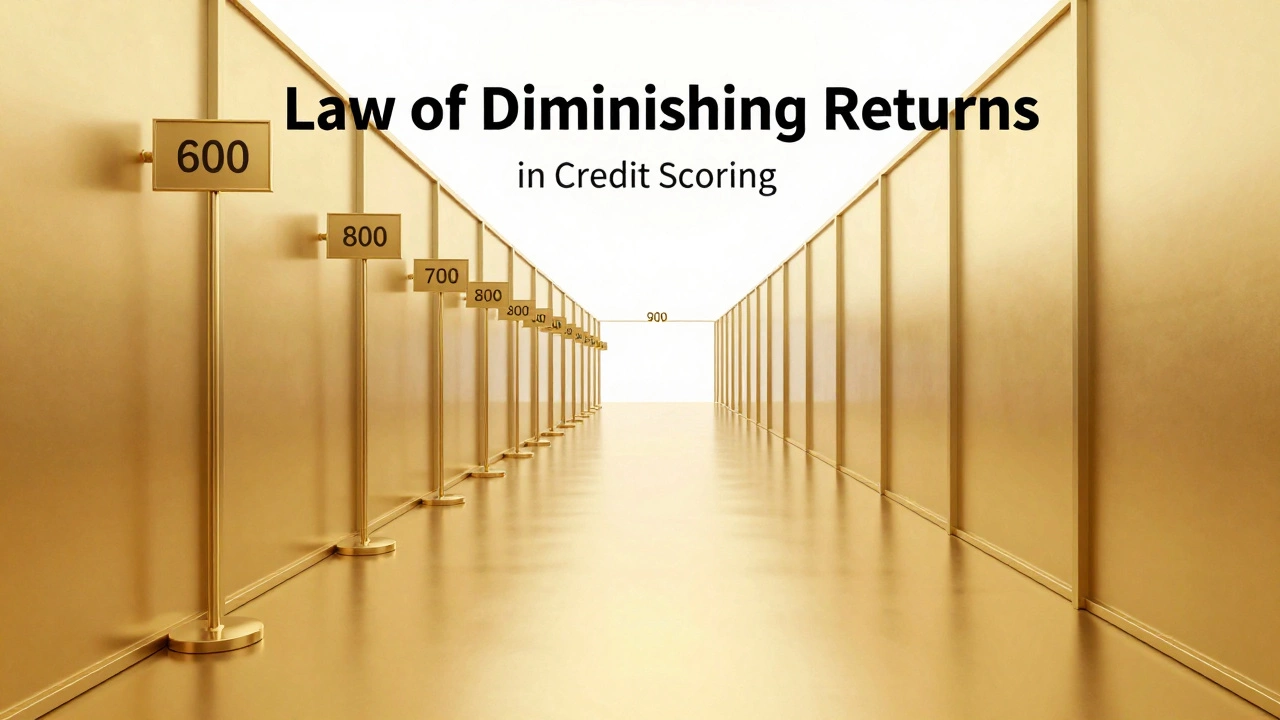
- Diminishing returns hit hard after 800; there is almost no financial benefit to moving from 820 to 900.
- The secret to a top-tier score is a mix of low utilization and a very old credit history.
The Great Scale Confusion
The short answer to whether a 900 credit score is possible depends entirely on which credit score is a numerical expression based on a level of creditworthiness, used by lenders to determine the likelihood that a borrower will repay a loan you are talking about. If you are in the US and checking your app, you are likely looking at FICO Score or VantageScore. For these two giants, the ceiling is 850. Period. You cannot break the 850 barrier because the algorithm simply isn't designed to go higher. If someone tells you they have a 900 FICO score, they are either mistaken or playing a prank on you.
However, if we shift our gaze to other parts of the world or specific niche models, the map changes. In some countries or with certain private lending models, scales go up to 900 or even 1,000. For instance, some specialized risk models used by B2B lenders operate on a 1,000-point system. In those specific environments, a 900 isn't just possible; it's the gold standard. The confusion usually stems from people applying US-centric logic to a global financial system.
What Actually Drives a Top-Tier Score?
Regardless of whether the cap is 850 or 900, the ingredients for a legendary score remain the same. It isn't about how much money you have in the bank-credit bureaus don't care about your salary. They care about how you handle debt. The most powerful lever you can pull is credit utilization, which is the ratio of your current outstanding credit card balances to your total credit limits. If you have a $10,000 limit and you're carrying a $2,000 balance, your utilization is 20%. To hit the stratosphere, you generally want this under 10%, and ideally under 3%.
Then there is the element of time. You can't buy a decades-long credit history; you have to earn it. Lenders love to see a long "average age of accounts." If your oldest credit card is from 1998, you have a massive head start over someone who just opened their first account last year. This is why financial advisors often tell you not to close your oldest credit card, even if you don't use it, because closing it shrinks your history and can cause your score to dip.
| Model | Maximum Score | Primary Focus | Common Use Case |
|---|---|---|---|
| FICO Score | 850 | Payment History & Debt | Mortgages & Auto Loans |
| VantageScore | 850 | Trended Data | Free Credit Monitoring Apps |
| Global Risk Models | 900 - 1,000 | Industry Specific Risk | Commercial/B2B Lending |

The Law of Diminishing Returns
Here is a secret the credit card companies won't tell you: once you cross the 800 mark, you've basically won the game. Whether you have an 810 or a theoretical 900, you are almost certainly going to get the same interest rate and the same perks. Lenders categorize borrowers into "tiers." Once you hit the "Excellent" tier, you've checked the box. A bank isn't going to give you a lower mortgage rate just because you have 50 extra points; they already view you as a zero-risk borrower.
In fact, obsessing over the perfect score can actually be counterproductive. Some people stop using their credit cards entirely to keep their balances at zero. Paradoxically, this can actually hurt your score. If you have zero activity across all accounts, the algorithm might decide you aren't "active" enough to be accurately scored, leading to a slight drop. The goal is to show that you use credit responsibly, not that you are afraid of it.
Common Pitfalls That Kill a Perfect Score
Even people with a 800+ score can see their numbers tank overnight. The fastest way to destroy a high score is a single missed payment. One 30-day delinquency on a credit card can knock a hundred points off your score instantly. The system is designed to reward consistency and punish volatility. One mistake tells the lender that your "perfect" streak was just a fluke.
Another common trap is the "credit application spree." Every time you apply for a new loan or card, the lender performs a hard inquiry. While one or two of these don't do much damage, five applications in a month signal desperation. It looks like you're suddenly in a financial hole and hunting for cash, which triggers a red flag for the scoring models and drags your number down.
How to Strategically Scale Your Score
If you're aiming for the highest possible number your specific model allows, you need a surgical approach. First, automate everything. Set up autopay for the minimum amount on every single account so you never suffer a late payment. Then, consider the "AZEO" method (All Zero Except One). This involves paying off all your credit cards to zero before the statement closes, except for one card where you leave a tiny balance-maybe $10 or $20. This proves you are using your credit without being dependent on it.
Lastly, diversify your credit mix. Having only credit cards is fine, but having a mix of "revolving credit" (cards) and "installment loans" (like a car loan or mortgage) shows that you can handle different types of debt. If you've only ever had a credit card, adding a small, fixed-term loan and paying it off perfectly can actually push your score into that elite bracket.
If I have an 850, can I ever get to 900?
If you are using FICO or VantageScore, no. Those models stop at 850. You have already reached the maximum possible score. If you are using a specific international or commercial model that goes up to 900, then yes, provided you continue to maintain low utilization and a clean payment record.
Does a high income help me get a 900 score?
Surprisingly, no. Your income is not a factor in calculating your credit score. You could earn a million dollars a year, but if you forget to pay your bills, your score will be low. Conversely, someone earning minimum wage can have a perfect score if they pay everything on time and keep their debt low.
Will closing an old credit card help my score?
Usually, it does the opposite. Closing an old account reduces the average age of your credit history and lowers your total available credit, which increases your utilization ratio. Both of these factors typically cause your score to drop, not rise.
How long does it take to see a score increase?
Credit scores usually update once a month when your lenders report your balance to the bureaus. If you pay down a huge chunk of debt today, you won't see the jump instantly; it will likely reflect on your next monthly statement update.
Are there "cheat codes" to instantly boost a score?
There are no one-day miracles, but "credit limit increases" can help. If you ask your bank to raise your limit from $5,000 to $10,000 and your balance stays the same, your utilization percentage drops instantly. This is often the fastest way to see a meaningful point jump.
Next Steps for Your Credit Journey
If you're currently sitting in the 600s or 700s, don't sweat the 900 myth. Focus on the foundations first. Start by pulling your free annual credit report to check for errors. It's surprisingly common to find a "ghost" account or a misreported late payment that isn't yours. Disputing these errors is the only way to get a "free" score boost without actually changing your spending habits.
For those already in the 800s, the best move is to stop checking your score every day. The stress of a 5-point dip is a waste of mental energy. Instead, focus on diversifying your investments or optimizing your savings. Once you've proven to the banks that you're a reliable borrower, the number becomes a vanity metric. Use your high score to negotiate better terms on a mortgage or a business loan-that's where the real value lies, not in the number itself.