

Remortgage Payment Impact Calculator
Enter your current mortgage details and proposed new deal to see if switching lenders saves you money or costs more.
Payment Comparison
Most people think remortgaging is a magic button that instantly lowers their monthly outgoings. You see a lower interest rate on the news, your current deal expires, and you assume switching lenders will free up cash flow. But here is the uncomfortable truth: remortgaging does not guarantee lower payments. In fact, for many homeowners in 2026, it can actually increase them. The outcome depends entirely on three variables: how much debt you still owe, how long you extend your loan, and what fees you pay to switch.
If you are looking at your budget and wondering if you should make the jump, you need to look past the headline interest rate. This guide breaks down exactly when your payments drop, when they stay flat, and when they spike-so you don’t get caught out by a higher direct debit next month.
The Myth of the "Lower Rate = Lower Payment" Equation
Your monthly mortgage payment consists of two parts: repaying the capital (the money you borrowed) and paying interest (the cost of borrowing). When you remortgage, you are essentially replacing one loan with another. If you keep the same repayment schedule but find a better interest rate, yes, your payments go down. That is the ideal scenario.
However, most people remortgage because their fixed-rate deal has ended, and they have been moved onto a Standard Variable Rate (SVR), which is often significantly higher. Switching back to a fixed deal might feel like a relief, but if the new fixed rate is only marginally lower than your previous deal-or if rates have risen since you last locked in-you might not see the savings you expect. Worse, if you take advantage of the switch to borrow more money (for home improvements or debt consolidation), your capital balance increases, pushing your monthly payments up even if the interest rate drops.
When Your Payments Actually Go Down
There are specific scenarios where remortgaging reliably reduces your monthly burden. Understanding these helps you decide if it is worth the paperwork.
- You have paid off significant capital: If five years have passed since you bought your home, you likely owe less now than when you started. With a smaller loan-to-value (LTV) ratio, you qualify for cheaper interest rates. For example, moving from a 75% LTV product to a 60% LTV product often unlocks lower rates, directly reducing your monthly cost.
- Interest rates have dropped: If you locked in a high rate during a period of economic volatility and current market rates are lower, refinancing can slash your interest costs. This is common when central banks cut base rates after a period of hikes.
- You switch from interest-only to repayment: Sometimes, people remortgage to consolidate other high-interest debts (like credit cards) into their mortgage. While this extends the total cost over time, it often lowers the immediate monthly cash flow pressure because mortgage rates are usually lower than unsecured debt rates.
The Trap: Why Payments Might Increase
This is the part most brokers gloss over. Extending your loan term is the number one reason monthly payments rise after a remortgage. Let’s say you have 15 years left on your mortgage. You want to lower your monthly bill, so you remortgage onto a new 25-year deal. Now, you are spreading the remaining debt over a longer period. Even if your interest rate is identical, your monthly payment drops because you are paying back the principal more slowly. But remember: you are now paying interest for ten extra years.
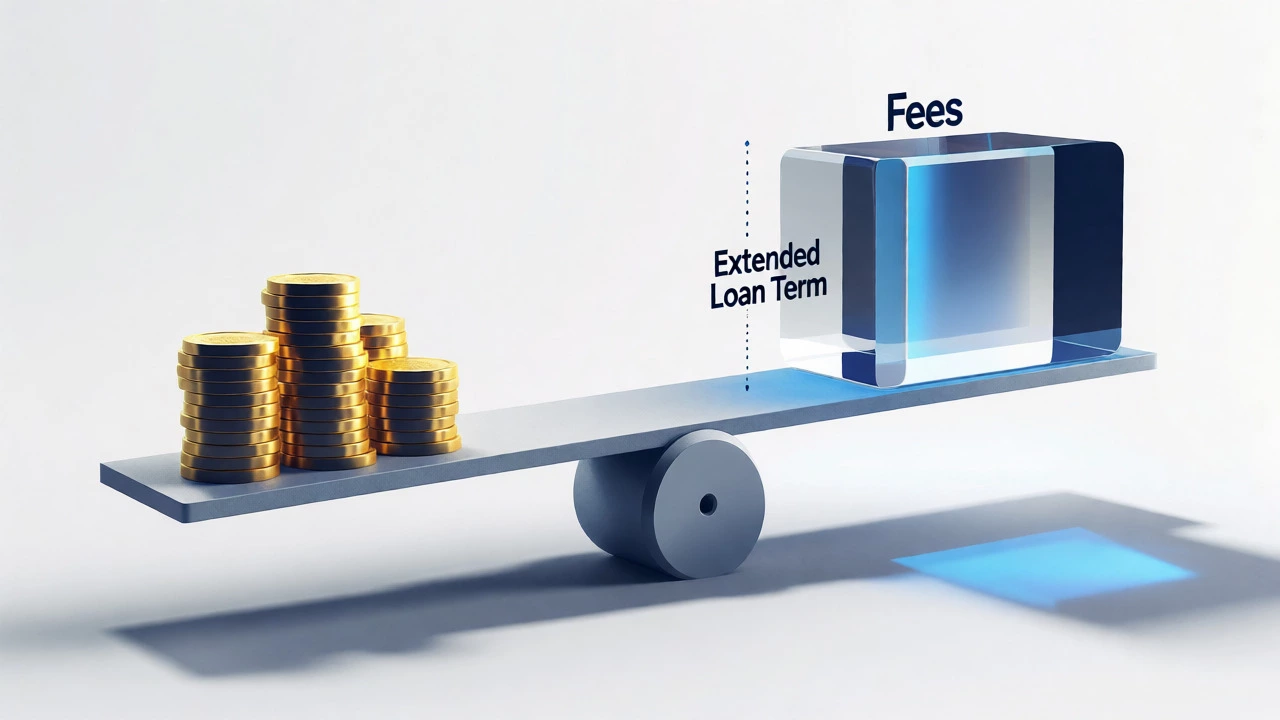
Another common pitfall is adding fees to the loan. Arrangement fees, valuation costs, and legal charges can add thousands to your balance. If you roll these fees into the mortgage rather than paying them upfront, your principal increases. On a £300,000 loan, rolling in £1,500 of fees might seem small, but it adds to your monthly repayment calculation.
| Scenario | Loan Balance | New Term | Interest Rate | Monthly Payment Impact |
|---|---|---|---|---|
| Standard Switch | Unchanged | Shorter or Same | Lower | Decrease |
| Term Extension | Unchanged | Longer (e.g., +5 years) | Same or Slightly Lower | Increase (due to fees/rate mix) or Decrease (cash flow focus) |
| Equity Release | Increased (borrowed more) | Same | Lower | Likely Increase |
| Rate Hike Context | Unchanged | Same | Higher than old deal | Increase |
Fees and Hidden Costs You Must Calculate
Before you sign anything, calculate the true cost of the switch. It isn’t just about the interest rate. Most UK lenders charge an arrangement fee, typically between £999 and £1,999. Some offer "no-fee" deals, but these usually come with higher interest rates. You need to do the math: does the higher interest rate over 2-5 years cost more than the upfront fee?
Additionally, consider early repayment charges (ERCs). If you leave your current lender before your fixed term ends, you could face penalties ranging from 1% to 5% of the outstanding balance. Paying a £5,000 penalty to save £50 a month means it would take over eight years to break even. Always check if you are within your ERC window before initiating a remortgage.
How to Check If You’ll Save Before You Apply
Don’t rely on a broker’s verbal estimate. Use a hard calculator approach:
- Get your exact payoff figure: Ask your current lender for the precise amount needed to clear your mortgage today, including any accrued interest.
- List all potential fees: Add the new lender’s arrangement fee, legal fees, and valuation costs. Decide whether you will pay these in cash or add them to the loan.
- Choose your term carefully: Match your new term to your financial goals. Do not automatically reset to 25 years if you only have 10 left unless you specifically need lower monthly cash flow.
- Run the numbers: Compare the new monthly payment against your current one. Subtract the total cost of fees divided by the months you plan to stay in the deal. If the net saving is less than £20-£30 a month, the hassle might not be worth it.

The Role of Equity Release and Debt Consolidation
Sometimes, people remortgage not to lower payments, but to access cash. Equity release products allow older homeowners to unlock value from their property without selling. Unlike standard remortgages, these loans often accrue interest rather than requiring monthly repayments, meaning your debt grows over time instead of shrinking. If you are considering this, understand that your monthly payments might be zero, but your final liability will be much higher.
For those consolidating debt, the logic is different. You might swap a £10,000 credit card balance at 20% APR for a mortgage portion at 4.5%. Your total monthly outgoings decrease because the mortgage rate is lower, but you must discipline yourself not to run up the credit card again. Otherwise, you end up with two debts: a larger mortgage and a fresh credit card balance.
Practical Steps to Minimize Risk
If you decide to proceed, follow these steps to ensure you don’t accidentally raise your payments:
- Lock in your rate quickly: Interest rates can move fast. Once you find a good deal, secure it within the lender’s validity period (usually 6 months).
- Check for portability: If you are moving house soon, ask if your current lender allows you to transfer your existing deal. This avoids new arrangement fees and potentially keeps your lower rate.
- Review your insurance: Don’t forget buildings and life insurance tied to your mortgage. New lenders may require new policies, which can add to your monthly costs if not shopped around.
Does remortgaging always reduce my monthly payments?
No. While a lower interest rate can reduce payments, extending your loan term or borrowing additional funds often increases them. The net effect depends on the balance between rate savings and increased principal or longer duration.
What happens to my payments if I extend the mortgage term?
Extending the term spreads your remaining debt over more years, which usually lowers the monthly payment. However, you will pay significantly more interest over the lifetime of the loan, increasing the total cost of ownership.
Are there hidden fees when remortgaging?
Yes, common fees include arrangement fees (£999-£1,999), valuation fees, legal/conveyancing costs, and early repayment charges from your old lender. These can offset any monthly savings if not calculated correctly.
Can I remortgage if my property value has decreased?
Yes, but it may affect your Loan-to-Value (LTV) ratio. If your property value drops, your LTV increases, which might disqualify you from the lowest interest rates or limit your ability to borrow extra funds.
Is it better to pay fees upfront or add them to the loan?
Paying upfront reduces your principal balance immediately, leading to slightly lower monthly payments and less total interest paid. Adding fees to the loan improves short-term cash flow but increases your debt and total interest cost over time.