

Pension Withdrawal Tax Estimator
This is an estimate based on the data provided. Actual taxes may vary based on your local laws and other income sources.
Key Takeaways
- Most pension income is treated as taxable income once it hits your bank account.
- Many countries offer a "tax-free lump sum" for a portion of the pot.
- Tax brackets usually determine how much you keep, meaning smaller pensions pay less.
- Contributions are often tax-deductible, meaning you save tax now to pay it later.
- Taking too much too fast can push you into a higher tax bracket.
To understand this, we first need to define what we are talking about. Pension Taxation is the process by which a government levies taxes on contributions to, and withdrawals from, retirement funds. Essentially, it is a deal with the state: they let you grow your money without paying taxes for decades, but they want their cut when you actually start spending it in your old age.
How the Tax-Deferred Model Works
Most modern retirement systems use what is called a tax-deferred structure. Whether you are using a 401(k) in the US or a Superannuation fund in Australia, the logic is the same. You put money in before it is taxed. This lowers your current taxable income, meaning you get to keep more of your paycheck today.
For example, if you earn $60,000 and put $5,000 into your pension, the government only taxes you as if you earned $55,000. This is a massive advantage because it allows your investments to compound. Instead of the government taking a slice every year, that money stays in the fund and grows. However, the "catch" is that this money isn't tax-free; it is just tax-delayed. When you retire and start drawing a monthly check, that money is now viewed as regular income.
The Tax-Free Lump Sum Strategy
One of the most important parts of pension taxation is the concept of the lump sum. In many jurisdictions, you aren't forced to take your pension as a monthly salary. You can often take a significant portion of it as a one-time payment.
In the UK, for instance, the Pension Freedom rules often allow retirees to take up to 25% of their total pot as a tax-free lump sum. If you have $400,000 saved, you could potentially take $100,000 out without paying a single cent in tax. This is a powerful tool for paying off a remaining mortgage or helping children with a house deposit before moving to a taxable monthly income stream.
But be careful. If you take too large a taxable lump sum in a single year, you might accidentally jump from a 20% tax bracket to a 40% bracket. This is a classic mistake where people try to "get the money out quickly" and end up giving a massive percentage to the tax office.
| Feature | Tax-Deferred (Traditional) | Tax-Free (Roth/Post-Tax) |
|---|---|---|
| Contribution Tax | Tax-deductible (Save now) | Paid upfront (Pay now) |
| Growth Phase | Tax-deferred | Tax-free |
| Withdrawal Tax | Taxed as income | Generally tax-free |
| Best For... | High earners today | Those expecting higher future taxes |

Company Pensions vs. Personal Pensions
Not all pensions are created equal. A Defined Benefit Pension (often called a final salary pension) is essentially a promise from an employer to pay you a set amount for life. Because these are typically funded by the employer, the payments you receive in retirement are almost always taxable as income.
Then you have the Defined Contribution Pension, which is just a pot of money invested in stocks and bonds. With these, you have more control over the taxation. You can choose how much to withdraw and when. If you have a year where you don't need much money, you can keep your withdrawals low to stay in a lower tax bracket. If you have a big expense, like a world cruise, you can take more, knowing you'll pay more tax that year.
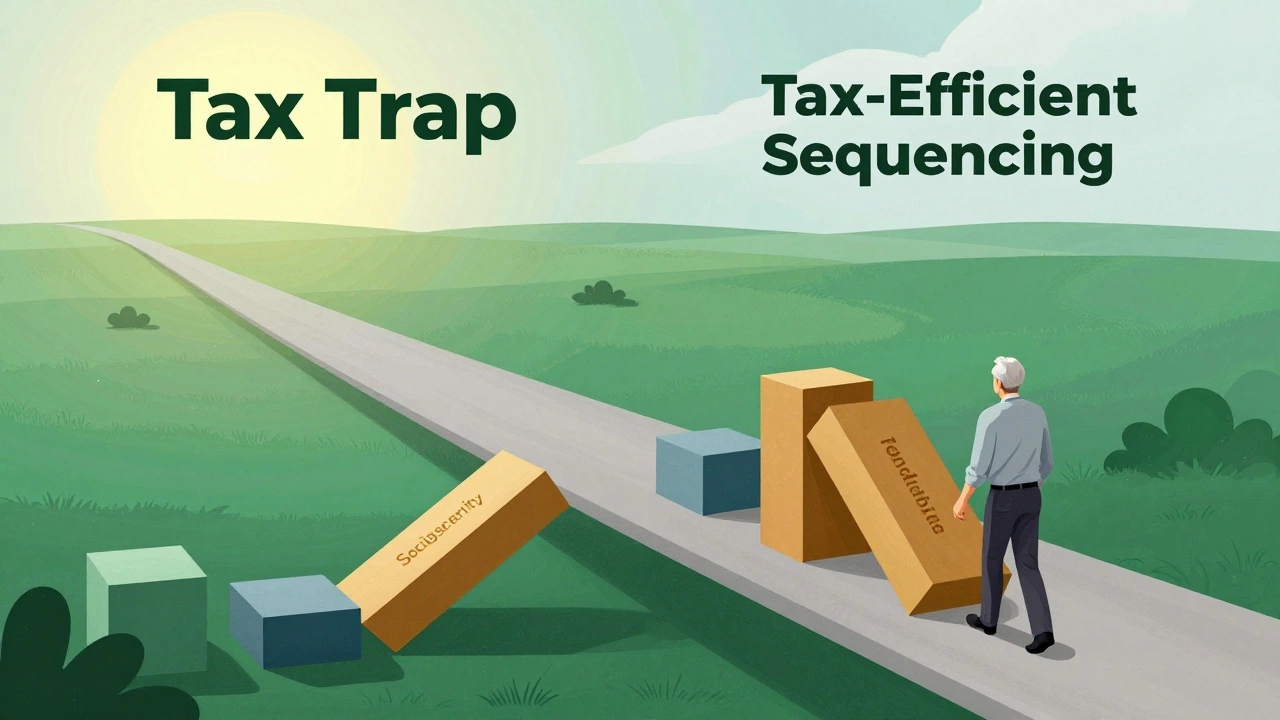
The Danger of the "Tax Trap"
There is a phenomenon known as the tax trap that catches many retirees. This happens when your pension income, combined with other sources like social security, rental income, or part-time work, pushes you over a certain threshold.
For example, in some regions, once your total income hits a specific limit, you might lose certain government credits or start paying a surcharge on your healthcare. This means that earning an extra $1,000 from your pension could actually result in you having *less* money in your pocket because of the resulting tax hike and loss of benefits. It's like a hidden tax that doesn't show up on a simple percentage chart.
How to Minimize Your Tax Bill
You don't have to just accept whatever the tax man demands. There are a few legal ways to keep more of your money. First, look into "tax-efficient sequencing." This means deciding which pots of money to empty first. If you have both a taxable pension and a tax-free savings account, it often makes sense to use the taxable pension up to the limit of your lowest tax bracket and then supplement the rest with your tax-free savings.
Another strategy is a phased retirement. Instead of stopping work abruptly, some people move to part-time work and start taking small pension payments. This prevents a sudden "income spike" that could trigger high taxes. Also, keep an eye on your Tax Allowance-the amount of money you can earn each year before you start paying any tax at all. If you can keep your total income under this threshold, your pension is effectively tax-free.
Is all pension income taxable?
Not necessarily. While most regular pension payments are taxable, many systems allow for a tax-free lump sum (often 25% of the pot). Additionally, if your total annual income stays below your country's personal tax-free allowance, you may not pay any tax on your pension.
What happens if I withdraw my pension early?
Withdrawing funds before the legal retirement age (usually 55 or 59.5 depending on the region) often triggers a heavy penalty. In the US, for example, you might face a 10% early withdrawal penalty from the IRS on top of the regular income tax you owe.
Are employer contributions taxed?
Generally, employer contributions to a pension are not taxed as income to the employee at the time they are made. This is one of the biggest perks of a company pension plan, as it allows the fund to grow much faster than if the money had been paid as a salary first.
Do I pay tax on a pension if I'm not working?
Yes. Pension income is treated as taxable income regardless of whether you are still employed. If your pension payments exceed the standard tax-free threshold, you will be required to pay income tax on those funds.
What is the difference between a Traditional and Roth pension?
A Traditional pension is funded with pre-tax money; you get a tax break now but pay tax when you withdraw. A Roth-style pension is funded with after-tax money; you pay tax now, but your withdrawals in retirement are completely tax-free.
Next Steps for Your Planning
If you are still in the accumulation phase, your main goal should be to maximize your tax-deductible contributions. Every dollar you put into a pension now is a dollar the government can't tax today. However, if you are within five years of retirement, it is time to shift your focus to a "withdrawal strategy."
Start by mapping out your expected income sources: Social Security, government pensions, company pensions, and private savings. Use a tax calculator to see which bracket you'll fall into. If you find yourself on the edge of a higher bracket, consider shifting some of your assets into tax-free vehicles now to avoid a surprise bill later. A quick chat with a certified financial planner can often save you thousands in avoidable taxes just by tweaking the order in which you withdraw your funds.