

$10,000 Loan Cost Calculator
Estimated Results
You need $10,000 in cash. Maybe it’s for a home repair, a medical bill, or consolidating high-interest credit card debt. You know you can get the money, but the real question is: what will that actually cost you every month? The short answer is anywhere from $150 to over $400, depending entirely on your credit health and how long you take to pay it back.
There is no single fixed price for a personal loana lump-sum unsecured loan used for various personal expenses. Lenders calculate your monthly payment based on three variables: the principal amount ($10,000), the annual percentage rate (APR), and the loan term. If you have excellent credit, you might pay very little in interest. If your credit is shaky, the interest charges could eat up a significant chunk of your budget.
The Math Behind Your Monthly Payment
To understand what you are walking into, you need to look at the formula lenders use. It’s not just dividing $10,000 by the number of months. That would be simple interest, which most installment loans do not use. Instead, they use an amortization schedule. This means your early payments go mostly toward interest, while later payments go toward the principal balance.
Let’s break down realistic scenarios for 2026. Interest rates fluctuate with the Federal Reserve's benchmark rate, but we can estimate costs based on current market averages for different credit tiers.
| Credit Score Range | Estimated APR (2026) | 3-Year Term (Monthly) | 5-Year Term (Monthly) | Total Interest Paid (5-Year) |
|---|---|---|---|---|
| Excellent (720+) | 8% - 12% | $313 - $330 | $203 - $222 | $2,190 - $3,320 |
| Good (690-719) | 12% - 16% | $330 - $351 | $222 - $244 | $3,320 - $4,640 |
| Fair (630-689) | 16% - 22% | $351 - $382 | $244 - $274 | $4,640 - $6,400 |
| Poor (<630) | 22% - 36% | $382 - $460 | $274 - $340 | $6,400 - $10,400 |
Notice the jump in cost as credit scores drop. A borrower with "Poor" credit doesn't just pay slightly more; they might pay double the interest of someone with "Excellent" credit. Over five years, that difference is thousands of dollars.
Term Length: The Hidden Trade-Off
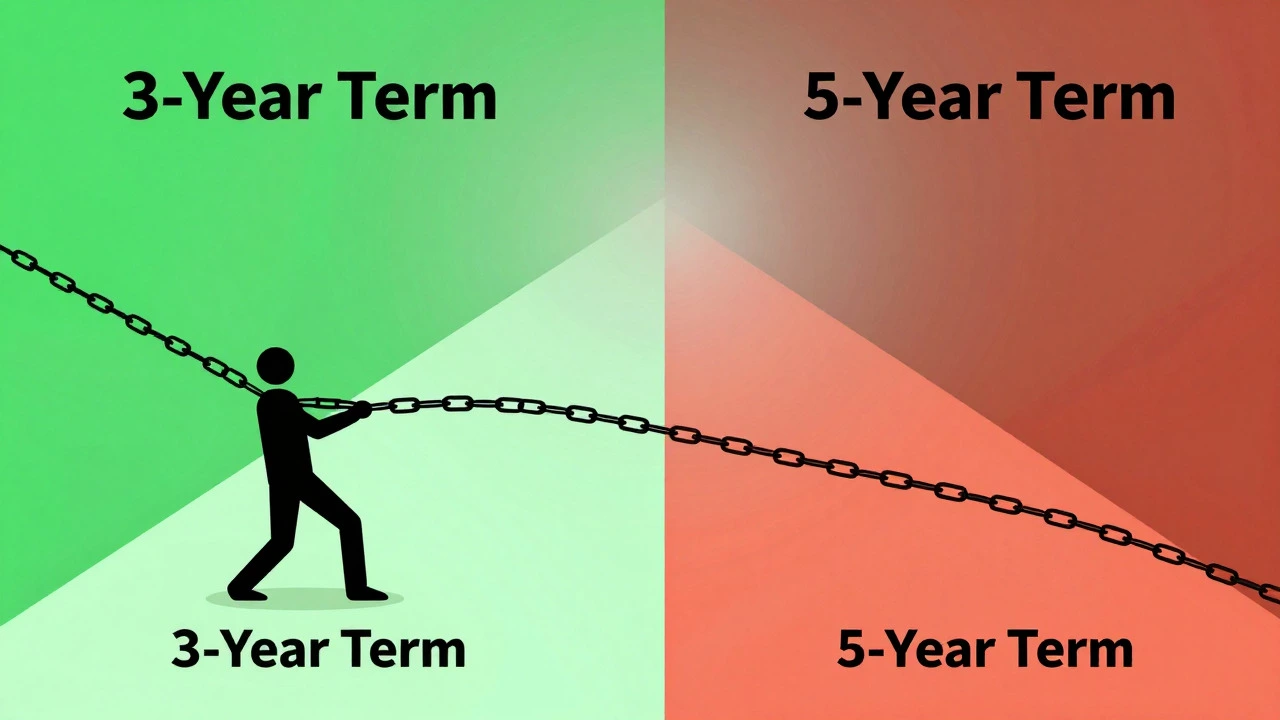
You might see a lower monthly payment for a 5-year term and think, "That’s easier on my budget." While true, it comes at a steep price. Stretching a $10,000 loan over 60 months instead of 36 reduces your monthly obligation, but it keeps the principal outstanding longer. Interest accrues on the remaining balance every single day.
If you choose a 3-year term, you pay off the debt faster and save significantly on total interest. However, the monthly hit is harder. For example, at a 15% APR, a 3-year payment is roughly $351, while a 5-year payment is $244. That $107 difference per month saves you about $2,300 in interest over the life of the loan.
Ask yourself: Can I afford the higher payment now to save money later? Or do I desperately need the breathing room of a lower payment, even if it costs me more in the end?
Factors That Determine Your Rate
Lenders don’t guess your rate; they calculate risk. Here is what drives that number up or down:
- Credit Score: This is the biggest factor. FICO scores above 720 typically unlock the best rates. Below 600, options become limited and expensive.
- Debt-to-Income Ratio (DTI): Lenders want to see that you have enough income left over after paying debts to handle this new loan. A DTI below 36% is generally preferred.
- Loan Purpose: Some lenders offer slightly better rates for debt consolidation because it reduces their risk profile compared to discretionary spending like vacations.
- Employment Status: Stable employment history reassures lenders that you will have the cash flow to make payments.
Hidden Costs Beyond the Monthly Payment
The monthly payment isn't the only number on the contract. Watch out for these additional fees that can inflate the actual cost of borrowing:
- Origination Fees: Many online lenders charge 1% to 8% of the loan amount upfront. On a $10,000 loan, a 5% fee means you only receive $9,500, but you still owe $10,000 plus interest.
- Prepayment Penalties: Some older banks charge you for paying off the loan early. Always look for "no prepayment penalty" clauses so you can save on interest by paying fast.
- Late Payment Fees: Missing a deadline can trigger a flat fee (e.g., $25-$40) or a percentage of the missed payment, plus damage to your credit score.
Alternatives to a Traditional Personal Loan
If the math for a standard personal loan looks too expensive, consider these alternatives before signing anything:
- 0% APR Credit Card: If you have good credit, you might qualify for a card with a 0% introductory period for 12-18 months. If you can pay off the $10,000 within that window, you pay zero interest. Just watch out for the balance transfer fee (usually 3-5%).
- Credit Union Loans: Non-profit credit unions often offer lower rates than big banks, especially if you are a member. Their overhead is lower, and they prioritize members over profits.
- Home Equity Line of Credit (HELOC): If you own a home, tapping into equity can yield much lower rates (often tied to prime rate) because the loan is secured by your property. Risk: You could lose your home if you default.
- Family or Friends: Informal loans can be interest-free, but they carry social risk. Put terms in writing to avoid ruining relationships.
How to Lower Your Monthly Cost
If you’re stuck with a high rate, there are ways to mitigate the damage:
Improve Your Credit First: If you don’t need the money immediately, spend 2-3 months lowering credit card balances and checking for errors on your report. Even a 20-point increase can drop your APR by several percentage points.
Add a Co-signer: If your credit is weak, adding a co-signer with strong credit can qualify you for their better rate. Be transparent with them about the responsibility.
Shorten the Term: As mentioned, a shorter term increases monthly payments but drastically cuts total interest. If you can stretch your budget slightly, choose the shortest term you can comfortably afford.
When a $10,000 Loan Makes Sense
Taking on debt should always be a strategic move. A $10,000 loan makes financial sense when:
- Consolidating High-Interest Debt: If you’re paying 25%+ on credit cards, moving that balance to a 12% personal loan saves you money instantly.
- Investing in Value: Using the loan for home repairs that increase property value or education that boosts earning potential can provide a return on investment.
- Emergency Situations: Medical emergencies or major car repairs necessary for work sometimes require immediate cash where saving isn't an option.
Avoid taking a personal loan for depreciating assets like vacations, electronics, or weddings unless you have already saved for them and are just using the loan for convenience. In those cases, the interest paid is pure loss.
What is the average monthly payment for a $10,000 loan?
For a typical 5-year term with an average interest rate of 12-15%, the monthly payment ranges from approximately $222 to $244. However, this varies widely based on credit score and loan term length.
Is it better to pay off a $10,000 loan in 3 years or 5 years?
Financially, a 3-year term is better because you pay significantly less in total interest. For example, at 15% APR, you save over $2,300 in interest with a 3-year term. Choose 5 years only if the lower monthly payment is essential for your cash flow.
Can I get a $10,000 loan with bad credit?
Yes, but it will be expensive. Borrowers with credit scores below 630 may face APRs between 22% and 36%. Consider looking into credit unions or secured loans to find more affordable options.
Do personal loans have hidden fees?
Many do. Origination fees ranging from 1% to 8% are common and are deducted from the loan amount upfront. Always check for prepayment penalties and late fees before signing.
Will applying for a $10,000 loan hurt my credit score?
Each application triggers a hard inquiry, which may temporarily drop your score by a few points. However, responsibly managing the loan and making on-time payments can improve your credit score over time.