

Student Loan Default Timeline Simulator
Select your loan type and slide through the months to see how missing payments impacts your financial status.
Late Fees & Contact
~15-30 Days: Lenders charge late fees (approx. 5% or $25-$40). Expect aggressive contact via calls and letters. Ignoring them triggers internal delinquency flags.
Credit Score Impact
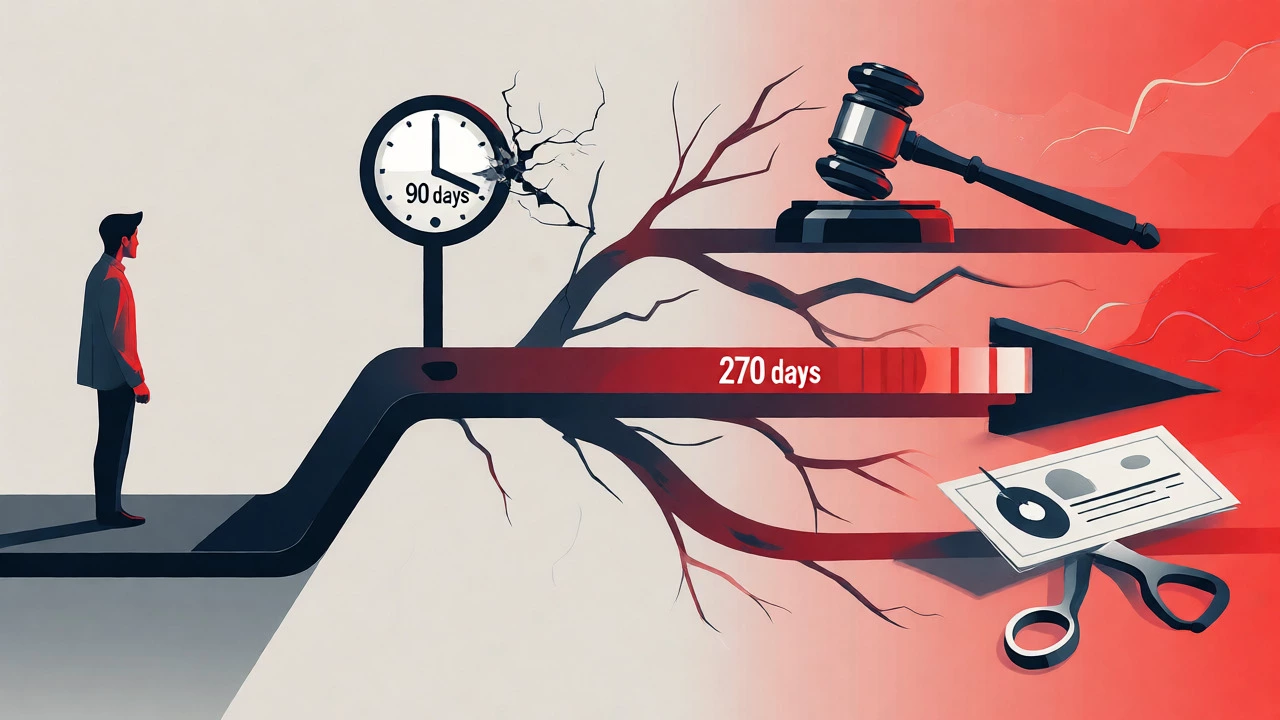
90 Days: Delinquency is reported to major credit bureaus (Equifax, Experian, TransUnion). This can drop a good credit score by 80–100 points, affecting future borrowing and housing.
Default Status
Federal: 270 Days / Private: ~60-90 Days: The loan enters default. Federal borrowers lose eligibility for further aid. Private lenders may trigger acceleration clauses, demanding full repayment immediately.
Wage Garnishment & Tax Offsets
Post-Default: Federal loans allow administrative wage garnishment (up to 15% of disposable pay) without court orders. Tax refunds can be intercepted. Private loans require lawsuits for similar actions.
Recovery Options
Even in default, options exist. Rehabilitation (making 9 affordable payments) removes the default status from federal credit reports. Consolidation combines loans but does not remove the default label.
You signed the papers, took out the student loans to cover tuition and living costs, and graduated with a degree. Then life happened. Maybe you lost your job, faced a medical emergency, or simply couldn't find work in your field. Suddenly, that monthly payment feels impossible. You skip one month, then two. The dread starts to creep in. What actually happens if you stop paying? Is it just a bad phone call from a lender, or does your financial life implode?
The short answer: it gets messy, fast. But it’s not instant ruin. There is a timeline, a series of escalating consequences that give you windows to fix things before they become permanent scars on your credit history. Understanding this timeline is your best defense.
Quick Summary / Key Takeaways
- Late fees hit first: Most lenders charge a fee after 15-30 days of non-payment.
- Credit damage occurs at 90 days: Late payments report to credit bureaus, lowering your score significantly.
- Default status varies by loan type: Federal loans default after 270 days; private loans can default much sooner (often 60-90 days).
- Wage garnishment is real: For federal defaults, up to 15% of disposable pay can be taken without a court order.
- Options exist even in default: Rehabilitation programs can remove the default status from your credit report.
The First Few Weeks: Late Fees and Lender Contact
When you miss your first payment, the sky doesn’t fall immediately. Most servicers have a grace period, typically 15 to 30 days, before they slap you with a late fee. This fee varies but usually sits around 5% of the unpaid amount or a flat rate like $25-$40. It’s annoying, sure, but manageable.
During this phase, expect aggressive communication. Automated calls, emails, and physical letters will pile up. Servicers are incentivized to get money moving again quickly. Ignoring them makes it worse because you lose the chance to negotiate a quick fix. If you know you’ll be late for just one cycle, calling ahead can sometimes waive the fee or arrange a partial payment plan. Silence, however, triggers their internal "delinquency" flag.
90 Days Later: Your Credit Score Takes a Hit
This is the critical threshold. Once you are 90 days past due, most lenders report the delinquency to the major credit bureaus: Equifax, Experian, and TransUnion. This isn’t just a note in the margin; it’s a red flag that stays on your report for seven years.
How much does it hurt? A single 90-day late payment can drop a good credit score by 80-100 points. That shift moves you from "prime" borrower territory to "subprime." Why does this matter now, when you’re already struggling? Because it affects everything else. Renting an apartment might require a higher deposit. Getting approved for a car loan becomes harder and more expensive. Even some employers check credit scores during hiring processes, particularly in finance or security roles. The ripple effect spreads beyond just the debt itself.
Defining Default: Federal vs. Private Loans
Here is where many borrowers get confused. "Delinquent" means you are behind. "Default" means the lender has given up on normal repayment and is taking drastic action. The definition depends entirely on who holds your debt.
| Feature | Federal Student Loans | Private Student Loans |
|---|---|---|
| Time to Default | 270 days (approx. 9 months) | Varies, often 60-90 days |
| Immediate Consequence | Loss of eligibility for further aid | Acceleration clause may trigger |
| Garnishment Power | Administrative wage garnishment (no court needed) | Requires lawsuit and court judgment |
| Tax Refund Offset | Yes, automatic | No, unless sued and judged |
| Rehabilitation Option | Yes, removes default status | Rarely available, requires negotiation |
For federal student loans, such as Direct Subsidized or Unsubsidized loans, you aren’t technically in default until you haven’t made a payment in 270 days. This long runway exists because the government wants to help you recover. However, once you hit that mark, the entire balance becomes due immediately. This is called "acceleration." While rare for federal loans to demand full repayment instantly, the legal right exists.
Private loans, issued by banks or credit unions, are different beasts. Their contracts vary wildly. Some define default as missing three consecutive payments. Others allow acceleration clauses, meaning if you default, the lender can demand the entire remaining balance immediately, plus interest and fees. Always read your promissory note. Assuming you have nine months like federal borrowers could cost you thousands.
The Nuclear Option: Wage Garnishment and Tax Offsets
If you ignore the debt long enough, collectors stop asking nicely. For federal loans, the Department of Education uses administrative wage garnishment. They don’t need to sue you. They send a notice to your employer, who must withhold up to 15% of your disposable income. Disposable income is what’s left after mandatory deductions like taxes and Social Security. It doesn’t touch your take-home pay directly, but it hits your budget hard.
Simultaneously, your tax refunds can be intercepted. If you file jointly, the IRS might take your spouse’s share too, depending on current rules and filings. This offset continues until the debt is paid in full. Imagine planning your year around a tax refund, only to see it vanish to service a debt you stopped managing two years ago.
With private loans, garnishment isn’t automatic. The lender must sue you, win a judgment, and then request garnishment through state laws. This takes time and legal fees, which often get added to your balance. But do not underestimate private lenders. Companies like Sallie Mae or Navient actively pursue judgments, especially for larger balances.
Can You Fix It? Rehabilitation and Consolidation
Being in default doesn’t mean you’re stuck forever. The system is designed to bring people back into the fold. For federal loans, there are two main paths out: rehabilitation and consolidation.
Rehabilitation is the gold standard. You agree to make nine reasonable, affordable monthly payments within ten consecutive months. "Affordable" is based on your income and family size, not the original high payment. Once you complete these nine payments, the default status is removed from your credit report. It won’t erase the previous late payments, but the devastating "Default" label disappears. You regain eligibility for federal aid, deferments, and forbearances.
Consolidation involves combining all your defaulted loans into a new Direct Consolidation Loan. To qualify, you usually need to either make three consecutive on-time payments under a repayment agreement or enroll in an income-driven repayment plan immediately. Consolidation simplifies multiple payments into one, but it does not remove the default status from your credit history. It just resets the clock on the new loan.
Which should you choose? If you want a clean slate on your credit report, go for rehabilitation. If you want lower monthly payments and simplicity, consider consolidation. Many borrowers use rehabilitation first to clear the record, then consolidate later if needed.

Long-Term Impact on Financial Life
Even after you resolve the default, the shadow lingers. Seven years is a long time in personal finance. During this period, getting a mortgage becomes difficult. Lenders view student loan defaults as high-risk indicators. Interest rates on any new debt will be higher. Insurance premiums in some states correlate with credit scores, so your auto insurance might rise.
There’s also the psychological toll. Debt stress impacts mental health, relationships, and career choices. People stay in jobs they hate because they fear losing benefits or stability. They delay buying homes or starting families. Breaking this cycle requires proactive management, not just passive waiting.
Preventing Default Before It Starts
The best strategy is avoiding the hole in the first place. If you see trouble coming, act early.
- Income-Driven Repayment (IDR): Switch to plans like SAVE or IBR. These cap payments at a percentage of discretionary income, sometimes reducing them to $0 if you earn little.
- Deferment or Forbearance: Use these pauses strategically. Deferment often stops interest from accruing on subsidized loans. Forbearance lets you pause payments temporarily, though interest usually keeps growing.
- Contact Your Servicer: Call them before you miss a payment. Ask about hardship options. They have tools you might not know about.
- Budget Adjustments: Cut non-essentials temporarily. Redirect every spare dollar to keep the account current. Maintaining "current" status preserves your future options.
Remember, student loan debt is rarely discharged in bankruptcy. Unlike credit card debt, you cannot simply file Chapter 7 and walk away easily. You must prove "undue hardship," a high legal bar. Therefore, treating student loans as priority debt is crucial.
Related Concepts and Connected Topics
Understanding student loan mechanics connects to broader financial literacy topics. Knowing how credit scores work helps you gauge the impact of delinquencies. Learning about debt-to-income ratios explains why lenders care so much about your monthly obligations. Exploring financial aid policies ensures you maximize grants and scholarships in the future to reduce borrowing needs.
These concepts form a network. Poor management of one area, like ignoring a bill, cascades into others, like denied housing applications. Building awareness across this network empowers you to make better decisions.
Does student loan debt ever go away?
Generally, no. Student loans do not expire like some other debts. In the US, federal loans are not subject to statutes of limitations, meaning the government can collect forever. Private loans may have state-specific statutes of limitations (often 3-10 years), but this only prevents lawsuits; it doesn’t erase the debt or stop reporting to credit bureaus. Discharge is possible only through specific programs like Public Service Loan Forgiveness, death, or total disability.
Will my parents’ credit be affected if I default?
It depends on the loan type. If your parents co-signed a private loan, yes, their credit will suffer because they are equally responsible. If they took out Parent PLUS loans, those are separate debts in their name, so your default doesn’t directly impact their credit score, though it may affect their ability to borrow more federal aid. For standard federal student loans in your name only, your parents’ credit remains untouched.
Can I still get a mortgage with student loan default?
It is very difficult but not impossible. Most conventional lenders require you to be out of default for at least 12 months. FHA loans may be more lenient if you have a written agreement to repay the debt and are making payments. However, you will likely face higher interest rates and stricter scrutiny. Clearing the default status through rehabilitation significantly improves your chances.
What is the difference between delinquency and default?
Delinquency means you are behind on payments but still within the lender’s tolerance window (e.g., 30, 60, or 90 days late). Default is a formal status indicating the lender considers the loan unlikely to be repaid under original terms. For federal loans, default happens after 270 days of non-payment. Default triggers severe consequences like wage garnishment and loss of benefits, whereas delinquency primarily hurts your credit score and incurs fees.
Do I need a lawyer if my student loan goes to collections?
Not always, but it helps if you are being sued. Collection agencies follow strict rules under the Fair Debt Collection Practices Act (FDCPA). If they harass you or make false claims, you have rights. If a private lender sues you, having legal representation can prevent a default judgment against you, which would allow immediate wage garnishment. For federal loans, administrative processes handle collections, so lawyers are less common unless you dispute the debt amount.