
Home Insurance Coverage Calculator
Home Details
Recommended Coverage
Enter your home details to see recommended coverage
Important: This calculator estimates replacement cost coverage only. Check for flood, earthquake, and other exclusions specific to your area.
Most people think home insurance is just about protecting their house from fire or theft. But that’s only the beginning. A typical home insurance policy covers a lot more than you might expect - and missing key details could leave you financially exposed when something goes wrong.
What Does Home Insurance Actually Cover?
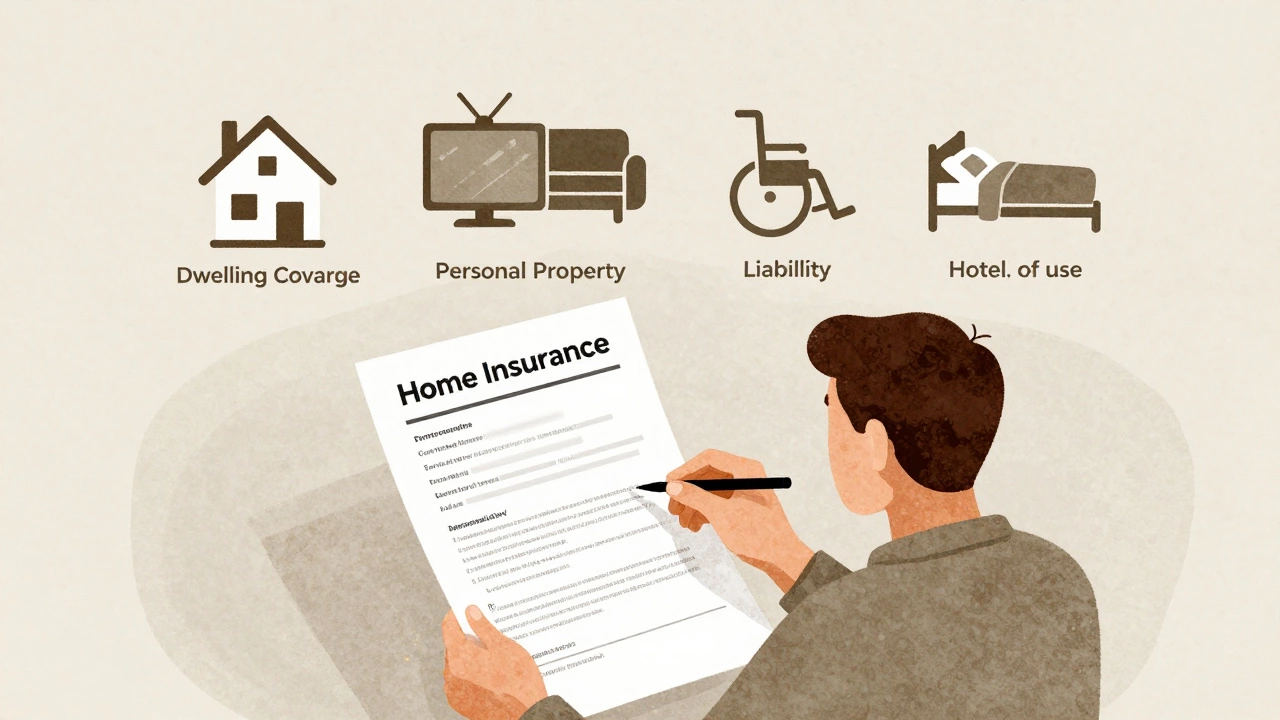
Home insurance isn’t one single thing. It’s usually split into two main parts: dwelling coverage and personal property coverage. Together, they protect both the structure of your home and everything inside it.
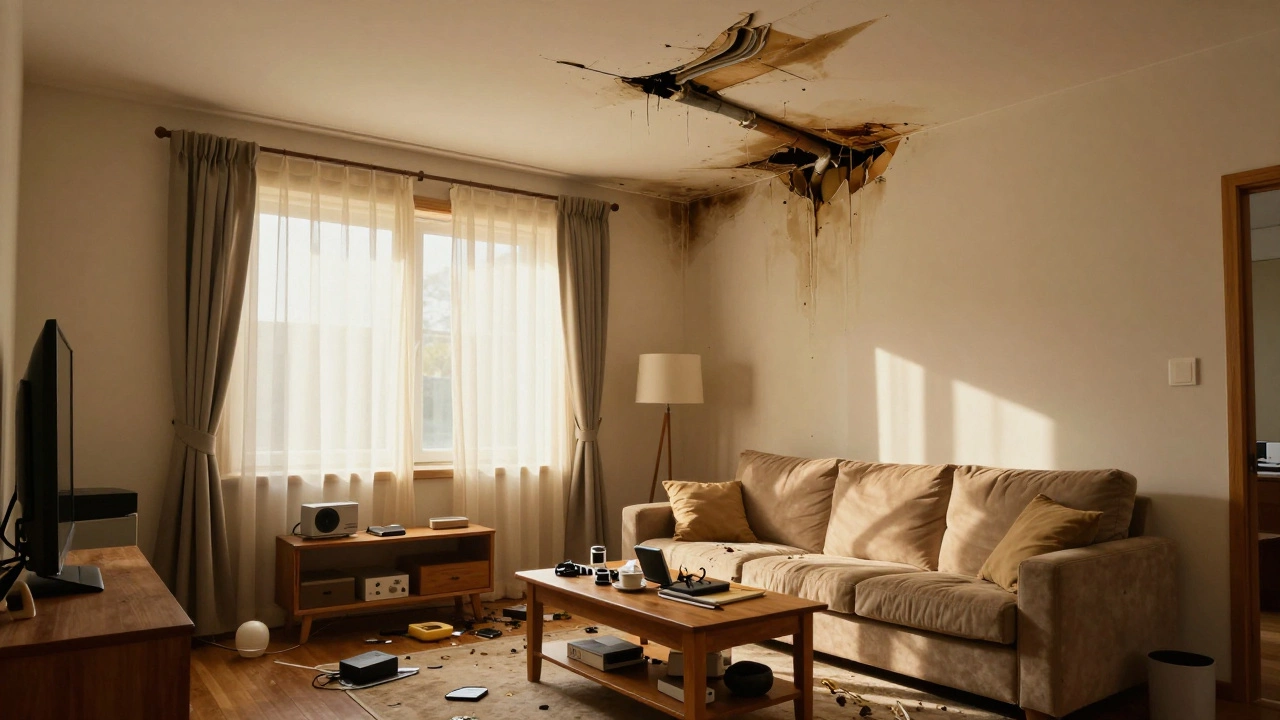
Dwelling coverage pays for repairs or rebuilding if your house is damaged by covered events like fire, lightning, windstorms, hail, or explosions. It doesn’t cover floods or earthquakes - those need separate policies. Most policies also cover attached structures like garages, fences, and driveways.
Personal property coverage handles your belongings: furniture, electronics, clothing, appliances, even your wedding ring. If your TV gets stolen during a break-in or your couch is ruined by water from a burst pipe, this part of the policy kicks in. Most insurers pay out based on actual cash value - meaning they factor in depreciation. But you can upgrade to replacement cost coverage, which pays to replace the item new, no matter how old it was.
Additional Living Expenses - When You Can’t Stay Home
What happens if your kitchen burns down and you can’t live in your house for three months? That’s where loss of use coverage comes in. It pays for hotel stays, meals, and even temporary rent if you need to relocate while your home is being repaired.
This isn’t just for fires. If a storm knocks out power for weeks and your home becomes uninhabitable due to mold or structural damage, this coverage still applies. Most policies give you 20% to 30% of your dwelling coverage limit for living expenses. So if your house is insured for $300,000, you could get up to $90,000 for temporary housing.
Liability Protection - The Hidden Lifesaver
One of the most important - and often overlooked - parts of home insurance is liability coverage. If someone slips on your icy sidewalk and breaks their hip, or your dog bites a neighbor, you could be sued. Liability coverage pays for medical bills, legal fees, and any court-ordered settlements up to your policy limit.
Standard policies usually include $100,000 to $300,000 in liability protection. Many people bump this up to $500,000 or even $1 million, especially if they have a pool, trampoline, or frequent guests. It’s cheap insurance against a massive financial risk.
Some policies also include medical payments coverage - a smaller amount, usually $1,000 to $5,000 - that pays for minor injuries to guests, regardless of fault. It helps avoid lawsuits before they start.
What’s Usually Not Covered?
Home insurance has clear limits. Floods, earthquakes, and sewer backups are almost always excluded. You need separate policies for those. Mold damage is only covered if it results from a sudden, covered event like a burst pipe. If it’s from long-term neglect or poor ventilation, you’re on your own.
Normal wear and tear doesn’t count. A roof that leaks because it’s 25 years old? Not covered. A furnace that dies after 15 years? Not covered. Insurance is for sudden, unexpected damage - not routine maintenance.
High-value items like jewelry, fine art, or collectibles often have sub-limits. A standard policy might cap jewelry claims at $1,500. If you own a $10,000 diamond ring, you’ll need to add a rider or schedule it separately.
How Much Coverage Do You Really Need?
Don’t base your dwelling coverage on what you paid for the house. That includes land value, which isn’t covered. Instead, use the replacement cost - how much it would cost to rebuild your home from scratch using current materials and labor rates.
Online calculators from insurers like State Farm or Allstate can give you a rough estimate. But the best approach? Talk to a local contractor. They know what labor and materials cost in your area. A 2,000-square-foot home in Ohio might cost $200 per square foot to rebuild. In California, it could be $350. That’s a $300,000 difference.
For personal property, most experts recommend insuring for 50% to 70% of your dwelling coverage. So if your house is insured for $300,000, aim for $150,000 to $210,000 in personal property coverage. Take a room-by-room inventory. List electronics, furniture, clothing, tools. Estimate replacement costs. You’ll be surprised how quickly it adds up.
Common Misconceptions
Many people think home insurance covers everything. It doesn’t. Here are three myths that trip people up:
- Myth: Home insurance covers damage from poor maintenance. Truth: Only sudden damage is covered. A slow leak from an old pipe? Not covered.
- Myth: Renters don’t need insurance. Truth: Renters insurance covers your belongings and liability - your landlord’s policy doesn’t touch your stuff.
- Myth: If I’m away on vacation, my home isn’t covered. Truth: Most policies still cover theft or fire even if you’re gone for 30 to 60 days. But if you leave your home unoccupied for longer, you may need to notify your insurer.

How to Make Sure You’re Fully Protected
Here’s a simple checklist to review your policy:
- Is your dwelling coverage based on replacement cost, not market value?
- Does your personal property coverage match your current belongings? Update it after big purchases.
- Is your liability limit at least $300,000? Consider $500,000 if you have assets to protect.
- Do you have separate flood or earthquake insurance if you live in a high-risk area?
- Have you scheduled high-value items like jewelry, cameras, or musical instruments?
- Do you know your deductible? $500 is common, but $1,000 or $2,500 lowers premiums.
Review your policy every year. Home values change. You buy new stuff. Your risk profile shifts. A policy from five years ago might not protect you today.
What Happens When You File a Claim?
When damage happens, call your insurer right away. Take photos. Keep receipts for repairs or replacements. Don’t throw away damaged items until the adjuster sees them.
The adjuster will visit, assess the damage, and compare it to your policy limits. If you have replacement cost coverage, you’ll usually get two payments: one for actual cash value upfront, and the rest after you repair or replace the item.
Claims for minor damage - like a broken window - might not be worth filing if your deductible is $1,000. You’ll pay out of pocket anyway. Save claims for major events.
Final Thoughts
Home insurance isn’t just a box to check. It’s your financial safety net. Most people don’t realize how much it covers - or how easily they can leave gaps. The goal isn’t to get the cheapest policy. It’s to get the right one.
Know what’s included. Know what’s not. Know your limits. And don’t wait until disaster strikes to find out you’re underinsured.
Does home insurance cover water damage?
Yes - but only if it’s sudden and accidental. A burst pipe, a leaking appliance, or a roof leak from storm damage are typically covered. But damage from long-term leaks, poor maintenance, or flooding is not covered unless you have a separate flood policy.
Is personal property coverage enough for expensive electronics?
Standard policies usually cap coverage for electronics at a few thousand dollars total. If you own high-end gear - like a $5,000 home theater system or professional camera equipment - you may need to add a rider or schedule the items separately to get full replacement value.
Do I need home insurance if I rent?
Your landlord’s insurance only covers the building. Your belongings - furniture, laptops, clothes - are not covered. Renters insurance is affordable and covers your personal property plus liability if someone gets hurt in your apartment.
What’s the difference between replacement cost and actual cash value?
Actual cash value pays what your item is worth today after depreciation. A 10-year-old TV might get you $200. Replacement cost pays to buy a new one - say $800 - no matter how old the original was. Replacement cost costs more in premiums but gives you far better protection.
Can I get home insurance if I have a history of claims?
Yes, but it may cost more. Multiple claims in a short time can raise your rates or make insurers reluctant to renew. Some companies specialize in high-risk policies. Shop around and be honest - hiding past claims can lead to denial when you need coverage most.