
Bitcoin Storage Recommender
Store Your Bitcoin Securely
Based on your holdings and needs, we'll recommend the best storage solution. Never keep large amounts on exchanges.
Buying Bitcoin is just the first step. Too many people panic after they click "purchase" and never touch it again-until the price swings and they realize they have no idea what to do next. You didn’t spend hours researching crypto only to let it sit idle. So what do you actually do with Bitcoin once you own it? The answer isn’t simple, but it’s straightforward.
Store it securely
Bitcoin isn’t like cash you can toss in a drawer. If you leave it on an exchange, you’re trusting someone else to keep it safe. And exchanges get hacked. In 2024 alone, over $1.2 billion in crypto was stolen from centralized platforms. That’s not a rumor-it’s public data from Chainalysis.
Your Bitcoin needs to live in a wallet you control. There are two main types: hot wallets and cold wallets. Hot wallets are apps or browser extensions-like Exodus or Trust Wallet. They’re easy to use and great for small amounts you plan to trade or spend. But they’re connected to the internet, which makes them vulnerable.
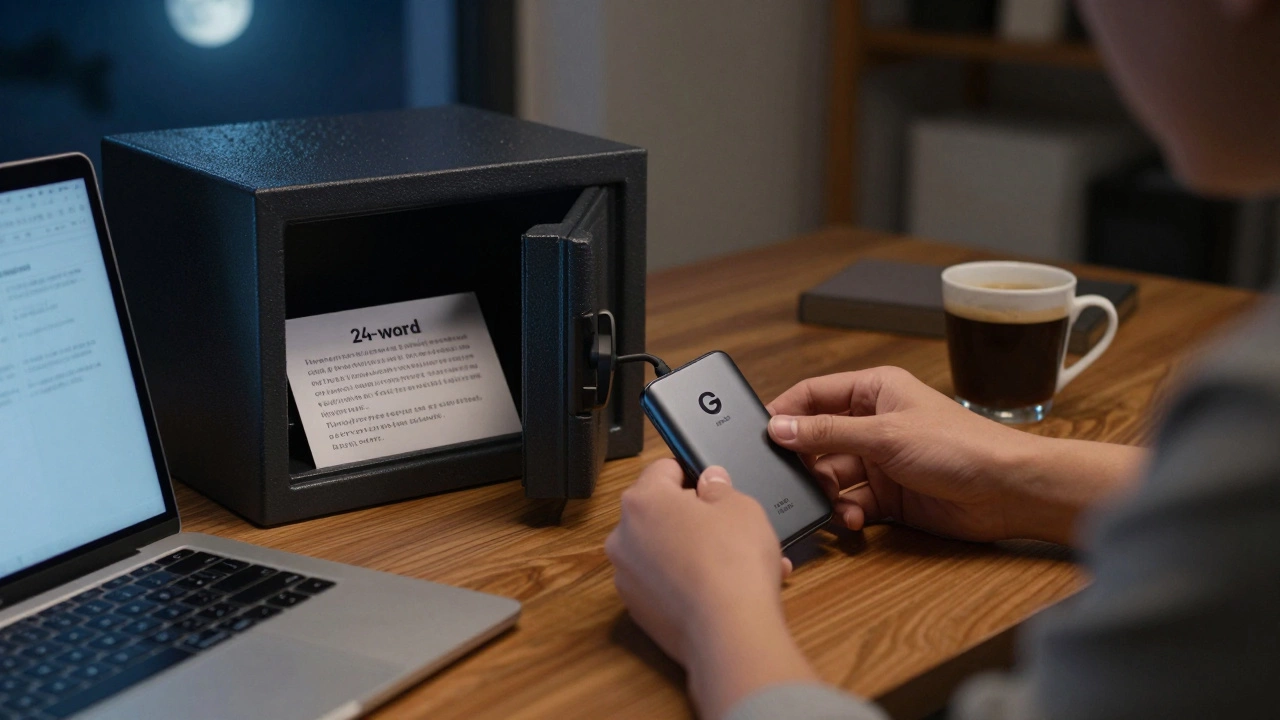
Cold wallets are offline. Think hardware devices like Ledger Nano S Plus or Trezor Model T. These cost $50-$150, but they’re your best bet for holding more than a few hundred dollars’ worth of Bitcoin. They work like a USB drive that only unlocks when you plug it in and enter a PIN. Even if your computer gets infected, your Bitcoin stays safe.
Pro tip: Write down your 12- or 24-word recovery phrase on paper. Don’t screenshot it. Don’t store it in the cloud. Keep it in a fireproof safe or safety deposit box. If you lose it, you lose your Bitcoin forever. There’s no customer service to call.
Decide how long you’re holding
Are you trading? Or are you saving? Bitcoin has no dividends, no interest, no earnings reports. Its value comes from scarcity and adoption. If you believe in it long-term, treat it like gold-not a stock.
People who bought Bitcoin in 2017 and held through every crash ended up with 10x, 20x, even 50x returns. Those who bought in 2021 and sold after the 30% dip in 2022? They lost money. Timing the market is a game you’ll almost always lose.
Set a rule: If you’re buying Bitcoin to hold for five years or more, don’t check the price daily. Use apps like Delta or CoinGecko to track your portfolio once a month. Let the math work for you. Bitcoin’s supply is capped at 21 million. Every four years, new supply is cut in half. That’s called the halving. The next one is in April 2026. Historically, prices rise 6-18 months after a halving.

Use it for real purchases
Bitcoin isn’t just an investment. It’s money. And more merchants accept it than you think.
In 2025, over 400,000 businesses worldwide accept Bitcoin directly, from home improvement stores like Home Depot’s online platform to airlines like AirBaltic and travel agencies like Travala.com. Even fast-food chains like Burger King in Argentina and McDonald’s in El Salvador let you pay with Bitcoin through third-party apps.
How? Use a wallet with a built-in payment feature. Apps like Strike or BlueWallet let you send Bitcoin instantly to merchants using QR codes. Some even convert Bitcoin to local currency at the point of sale so the merchant doesn’t have to hold crypto. That means you can buy groceries with Bitcoin without the store ever seeing a single satoshi.
Don’t wait for Amazon to accept it. Start small: buy a gift card from Bitrefill, pay for a VPN, or tip a content creator on platforms like Nostr or Mastodon. The more you use Bitcoin as money, the more normal it becomes.
Learn how to earn with it
You don’t have to just hold Bitcoin to make it work for you. There are ways to earn passive income-but tread carefully.
Bitcoin lending platforms like BlockFi (before its collapse) and now newer players like CoinLoan or Celsius Network (restructured) let you lend your Bitcoin and earn interest. Rates hover around 3-5% annually. That’s not huge, but it’s better than a savings account. Just remember: if the platform fails, you could lose everything. Only lend what you can afford to lose.
Another option: Bitcoin staking isn’t possible-Bitcoin doesn’t use proof-of-stake. But you can earn Bitcoin by running a Lightning Network node. It’s technical, but tools like LND or RTL make it easier. You earn tiny fees when others use your node to send payments. Some people make $5-$20 a month. Not life-changing, but it’s free money if you already own Bitcoin.
Don’t chase yield. If someone promises 10% or 20% returns on Bitcoin, it’s a scam. Real yield comes from real utility, not hype.

Protect yourself from scams
Bitcoin is irreversible. Send it to the wrong address? Gone. Fall for a fake wallet app? Gone. Get tricked into giving away your seed phrase? Gone.
Scammers are everywhere. They’ll DM you on Twitter saying they’ll double your Bitcoin. They’ll send you a link to a fake Ledger site. They’ll pretend to be customer support and ask for your recovery phrase. No legitimate company will ever ask for that.
Always verify URLs. Bookmark your wallet’s real website. Never click links in emails or DMs. Use two-factor authentication on your exchange accounts-but never rely on SMS. Use an authenticator app like Authy or Google Authenticator instead.
And if you’re ever unsure? Stop. Walk away. Talk to someone who’s been doing this for years. Join a local Bitcoin meetup. Read Bitcoin Magazine. The more you learn, the less likely you are to get fooled.
Keep learning
Bitcoin changes fast. New wallets. New rules. New ways to use it. What worked in 2023 might be outdated in 2026.
Follow developers on X (formerly Twitter). Subscribe to newsletters like The Block or Bitcoin Magazine. Watch YouTube channels like Andreas Antonopoulos or Preston Pysh. Don’t just consume-ask questions. Try things out. Set up a test wallet with $5 worth of Bitcoin and send it to a friend. See how it works.
The goal isn’t to become an expert overnight. It’s to build habits. Store it safely. Hold it long-term. Use it when you can. Learn as you go. Bitcoin isn’t a get-rich-quick scheme. It’s a new kind of money. And like any money, it only works if you understand how to use it.
Can I just leave Bitcoin on the exchange where I bought it?
Technically, yes-but it’s risky. Exchanges are targets for hackers. In 2024, over $1.2 billion in crypto was stolen from centralized platforms. If the exchange goes down or gets hacked, you could lose everything. For anything more than a small amount, move your Bitcoin to a wallet you control.
What’s the safest way to store Bitcoin?
The safest way is a hardware wallet (cold wallet) like Ledger or Trezor. These devices store your private keys offline and only connect when you need to sign a transaction. Combine this with a written backup of your recovery phrase stored in a secure, fireproof location. Never store your recovery phrase digitally.
Can I use Bitcoin to pay for everyday things?
Yes. Over 400,000 businesses accept Bitcoin directly, including travel sites, online retailers, and even some restaurants. You can also buy gift cards with Bitcoin through Bitrefill and use them anywhere. Apps like Strike let you pay merchants instantly using Bitcoin, often converting it to local currency on the backend.
Is earning interest on Bitcoin safe?
It’s possible, but risky. Lending platforms offer 3-5% annual interest, but they’re not banks. If the platform fails, you lose your Bitcoin. Only lend what you can afford to lose. Avoid anything promising returns over 8%. High returns usually mean high risk-or fraud.
What should I avoid doing with Bitcoin?
Never share your recovery phrase. Never click links in unsolicited messages. Never send Bitcoin to someone you don’t know. Never trust anyone who says they’ll "double your Bitcoin." And never keep large amounts on exchanges. These are the top ways people lose Bitcoin-and they’re all preventable.