

Debt Consolidation Credit Impact Calculator
You stare at your credit report, wondering if consolidating your debt is a lifeline or a trap. The fear is real: you’ve heard stories of people taking out a loan to pay off cards and watching their scores plummet. It’s a valid concern because debt consolidation, which involves combining multiple debts into a single payment, does trigger changes in how credit bureaus view your financial behavior. But does it actually ruin your credit? In most cases, no. In fact, done correctly, it can be the fastest way to rebuild trust with lenders.
The short answer is that debt consolidation causes a temporary dip in your score, but it sets you up for long-term growth. The key lies in understanding the mechanics behind the scenes-specifically how credit scoring models weigh new accounts versus old ones. Let’s break down exactly what happens to your numbers when you sign those papers.
The Immediate Hit: Hard Inquiries and New Accounts
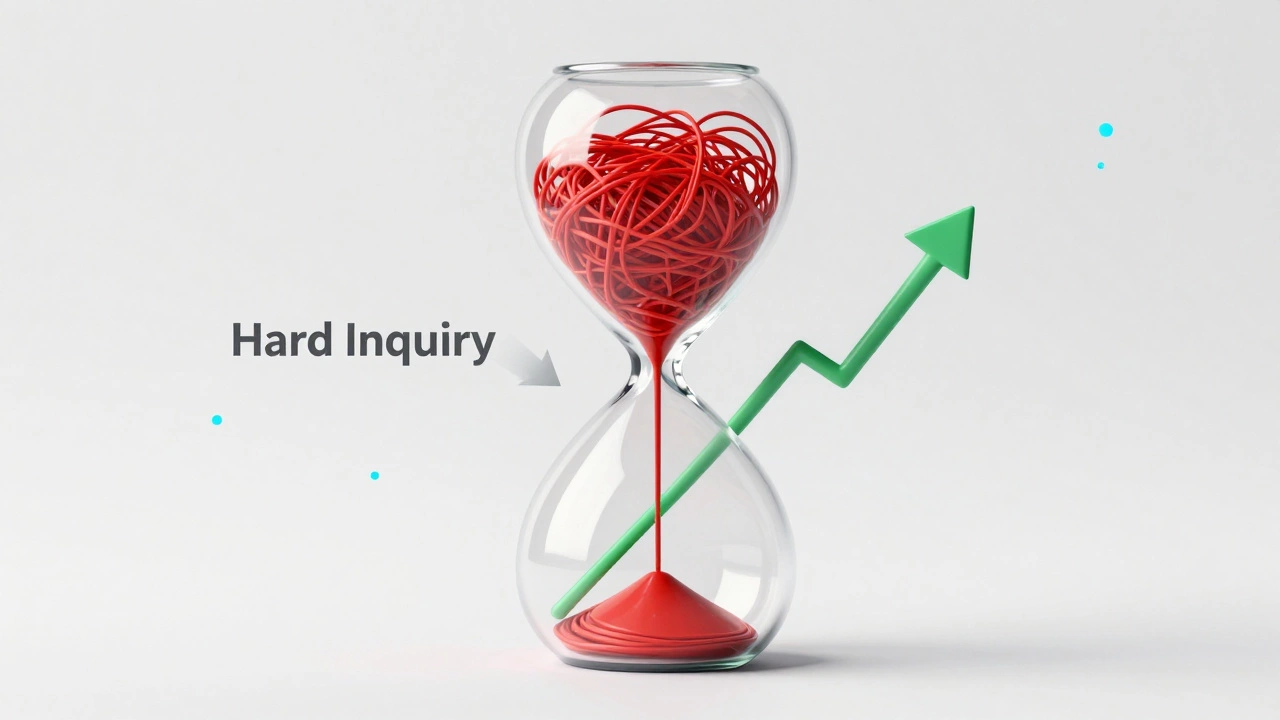
When you apply for a consolidation loan a personal loan used to pay off existing high-interest debts, the lender performs a hard pull on your credit report. This is known as a hard inquiry. Unlike a soft check, which doesn’t affect your score, a hard inquiry signals to credit bureaus that you are actively seeking new credit. Typically, this drops your FICO score by 5 to 10 points. It feels like a punch to the gut, especially if you’re trying to qualify for a mortgage soon, but it’s minor and fleeting.
Here is why it matters less than you think. Credit scoring algorithms, particularly FICO 8 and VantageScore 3.0+, are smart enough to recognize rate-shopping. If you apply for several loans within a short window (usually 14 to 45 days), they count them as a single inquiry. So, comparing rates isn’t penalized heavily. However, once that first loan opens, a new account appears on your report. This triggers the second factor: the average age of accounts.
Your credit history length makes up about 15% of your FICO score. When you open a brand-new loan, it lowers the mathematical average of all your open accounts. If you have a 10-year-old credit card and you open a new loan today, your average age drops instantly. This contributes to that initial score drop. But remember, time heals all wounds. That new account will age just like the old ones. Within two years, the impact on your average age becomes negligible.
The Silver Lining: Closing Old Accounts vs. Utilization
This is where most people get confused. You use the loan to pay off your credit cards. Those cards now show a $0 balance. Great, right? Not necessarily. Here is the catch: paying off a card doesn’t close the account automatically, but many people do close them after paying them off to "stop using them." Closing an account reduces your total available credit limit. Since credit utilization ratio accounts for 30% of your score, reducing your available limit while keeping other balances steady can spike your utilization percentage, hurting your score further.
Let’s look at the math. Say you have three cards with a total limit of $10,000 and you owe $3,000. Your utilization is 30%. You consolidate that $3,000 into a loan and pay off the cards. If you keep the cards open, your available credit remains $10,000, and your utilization drops to 0%. Your score soars. If you close those cards, your available credit might drop to $5,000 (if one card was closed) or stay high if you keep them dormant. The golden rule? Keep the paid-off cards open. Do not cut them up immediately. Use them occasionally for small purchases like gas, then pay them off in full. This keeps the accounts active and preserves your credit limit.
Furthermore, the type of debt matters. Credit cards are revolving credit; loans are installment credit. Having a mix of both is beneficial for your credit profile. By adding an installment loan to your mix, you demonstrate to lenders that you can handle different types of repayment structures. This diversity can actually boost your score over time, offsetting the initial hit from the hard inquiry.
Who Should Avoid Consolidation?
While consolidation helps many, it is not a magic wand for everyone. There are specific scenarios where it could genuinely damage your financial standing. First, if you have poor impulse control, consolidation is dangerous. Paying off your cards gives you a false sense of security. If you start running up charges on those now-empty cards while still making payments on the consolidation loan, you double your debt burden. This leads to higher interest costs and eventually, default, which ruins your credit far more than any inquiry ever could.
Second, consider the cost. If you qualify for a low-interest loan (say, under 8%), consolidation makes economic sense. But if your credit is already damaged, you might only qualify for high-rate predatory loans. Taking out a 20% APR loan to pay off 18% APR credit cards is pointless. You’re swapping one expensive problem for another, adding fees and inquiries without saving money. Always calculate the total cost of the loan, including origination fees, before signing.
Also, beware of secured loans. Some lenders offer lower rates if you put up collateral, like your home equity. This turns unsecured debt into secured debt. If you miss a payment on an unsecured card, you get harassed by collectors. If you miss a payment on a home equity line of credit (HELOC), you lose your house. The risk profile changes drastically here.
| Credit Factor | Immediate Impact | Long-Term Impact | Weight in FICO Score |
|---|---|---|---|
| Payment History | Neutral (if paid on time) | Positive (simplifies tracking) | 35% |
| Credit Utilization | Negative (if cards closed) | Positive (balances reduced) | 30% |
| Length of History | Negative (lowers average age) | Neutral (accounts age over time) | 15% |
| New Credit | Negative (hard inquiry) | Neutral | 10% |
| Credit Mix | Positive (adds installment loan) | Positive (diversified portfolio) | 10% |

Strategies to Protect Your Score During Consolidation
If you decide to move forward, you can mitigate the damage. Start by checking your credit report for errors. Dispute any inaccuracies before applying. A clean slate ensures you get the best possible rate, minimizing the interest you pay. Next, time your applications carefully. If you plan to buy a car or house in the next six months, wait. The dip in your score might disqualify you from favorable mortgage terms. Otherwise, apply during a period when you aren’t shopping for other major credit.
Automate your payments. Missing a single payment on your new consolidation loan is catastrophic. Late payments stay on your report for seven years and drag your score down significantly. Setting up autopay ensures you never fall behind. Even if you pay the minimum, being on time is crucial. Once you establish a pattern of on-time payments for six months, your score will likely recover and exceed its pre-consolidation level.
Finally, monitor your progress. Use free tools provided by your bank or credit card issuer to track your score monthly. Look for trends, not daily fluctuations. You should see the utilization benefit kick in within 30 days as the credit bureaus update your card balances to zero. The inquiry and age-of-account penalties will fade slowly over 12 to 24 months.
Alternatives to Consider
If consolidation feels too risky, there are other paths. Balance transfer credit cards offer 0% introductory APR for 12 to 18 months. This avoids a hard inquiry if you already hold the card, but requires discipline to pay off the balance before the promo period ends. Another option is the debt snowball method: paying off smallest debts first while maintaining minimums on others. This doesn’t involve new credit, so your score remains stable, though it may take longer to become debt-free.
Ultimately, debt consolidation is a tool, not a verdict. It won’t ruin your credit if you treat it with respect. It simplifies your life, lowers your interest rates, and provides a clear roadmap to freedom. Just don’t let the empty credit cards tempt you back into the cycle. Stay disciplined, keep those old accounts open, and watch your score climb.
How long does it take for my credit score to recover after debt consolidation?
Most people see their scores stabilize within 3 to 6 months. The initial drop from the hard inquiry and new account usually fades as the utilization ratio improves and payment history builds. Full recovery often takes 12 to 24 months, depending on your overall credit management.
Should I close my credit cards after paying them off with a consolidation loan?
No, avoid closing them immediately. Keeping them open maintains your total available credit, which keeps your credit utilization ratio low. Low utilization is a major booster for your credit score. Use the cards sparingly for small expenses and pay them off in full each month.
Does debt consolidation affect my ability to get a mortgage?
It can temporarily complicate things due to the new debt obligation and potential score dip. Lenders prefer stability. If you need a mortgage soon, wait until you have made 6 to 12 months of on-time payments on the consolidation loan to demonstrate reliability.
What is the difference between a hard and soft inquiry?
A hard inquiry occurs when a lender checks your credit for a new loan application, affecting your score slightly. A soft inquiry happens when you check your own credit or when a company pre-approves you, having no impact on your score.
Can debt consolidation help if I have bad credit?
It depends. With bad credit, you may only qualify for high-interest loans, which defeats the purpose. However, if you can find a low-rate option or a secured loan, it can help streamline payments. Focus on improving your score through on-time payments first before seeking new credit.