

50/30/20 Budget Calculator
Your Budget Breakdown
Calculate how to split your income into needs, wants, and savings/debt based on the 50/30/20 rule
This is your take-home pay after taxes
Enter your monthly after-tax income to see your budget breakdown
Most people know they should budget, but few actually stick with it. Why? Because most budgeting methods feel like a chore-too strict, too complicated, or just not realistic. Enter the 50/30/20 rule. It’s not magic, but it’s one of the simplest, most effective ways to take control of your money without giving up everything you enjoy.
What Exactly Is the 50/30/20 Rule?
The 50/30/20 rule breaks your after-tax income into three clear buckets:
- 50% for Needs - Things you absolutely must pay to survive and function.
- 30% for Wants - Everything that makes life enjoyable but isn’t essential.
- 20% for Savings and Debt Repayment - Building your future, whether that’s emergency cash, retirement, or paying off loans.
This isn’t a new idea. It was popularized by Senator Elizabeth Warren and her daughter Amelia Warren Tyagi in their 2005 book All Your Worth. Since then, financial advisors, banks, and apps like Mint and YNAB have adopted it because it works for real people-not just finance nerds.
What Counts as a Need?
Needs aren’t just rent and groceries. They’re the non-negotiables that keep your life running:
- Housing (rent or mortgage)
- Utilities (electricity, water, gas, internet)
- Groceries and basic household supplies
- Transportation (car payment, gas, public transit)
- Health insurance and essential medical costs
- Minimum debt payments (credit cards, student loans)
- Childcare or dependent care if required for work
Here’s the catch: many people overcount needs. That $1,200 monthly phone bill with premium streaming, gym membership, and premium cable? Those aren’t needs-they’re wants masquerading as necessities. If you can live without it for a month, it’s probably not a need.
What Counts as a Want?
Wants are what make life worth living. They’re the things you choose to spend on because they bring joy, comfort, or convenience:
- Dining out
- Streaming services (Netflix, Spotify, etc.)
- Hobbies and entertainment
- Shopping for clothes or gadgets you don’t need
- Vacations and weekend trips
- Expensive coffee or daily takeout
- Subscriptions you forgot you had
Here’s the truth: you don’t have to give up your wants. The 50/30/20 rule lets you spend freely on them-up to 30%. That’s more than enough for a few nice dinners, a monthly massage, or a new pair of sneakers. The problem isn’t spending on wants. It’s letting wants eat up 70% of your income.
Why 20% for Savings and Debt?
This is where most people fail. They think saving means putting away spare change. But 20% isn’t optional-it’s the engine of financial freedom.
This 20% should go to:
- Emergency fund (aim for 3-6 months of expenses)
- Retirement accounts (401(k), IRA)
- Extra payments on high-interest debt (credit cards, personal loans)
- Saving for big goals (car, home down payment, education)
Let’s say you earn $4,000 after taxes. That’s $800 for savings. If you’re carrying $5,000 in credit card debt at 20% interest, putting $500 a month toward it means you’ll be debt-free in under a year. That’s not just math-it’s life-changing.
Real-Life Example: Sarah’s Budget
Sarah earns $4,800 a month after taxes. Here’s how she uses the 50/30/20 rule:
- Needs ($2,400): Rent ($1,200), groceries ($400), utilities ($150), car payment ($300), insurance ($200), minimum student loan ($150)
- Wants ($1,440): Dining out ($400), Netflix and Spotify ($30), new clothes ($200), weekend trips ($400), coffee ($150), subscriptions ($60)
- Savings/Debt ($960): Emergency fund ($400), 401(k) ($300), extra student loan payment ($200), Roth IRA ($60)
She’s not rich. She doesn’t make six figures. But she’s not stressed. She has a cushion, she’s paying down debt, and she still gets to travel and eat out. That’s the power of this rule.
What If Your Needs Are More Than 50%?
Life isn’t perfect. If you live in a high-cost city, have medical bills, or support family members, your needs might hit 60% or even 70%. That’s okay.
The rule isn’t a prison-it’s a guide. If needs are high, you adjust the other categories:
- Reduce wants to 20% or less
- Put 10-15% toward savings, even if it’s slow
- Focus on increasing income-side gigs, raises, better housing
Many people in this situation feel stuck. But the 50/30/20 rule still helps. It forces you to see where your money is going. Once you know, you can make smarter choices-like moving to a cheaper apartment or switching to a cheaper phone plan.
What If You’re Debt-Free and Want to Save More?
Great! You’re ahead of 80% of Americans. If you’ve paid off your credit cards and built your emergency fund, you can shift the 20% into long-term goals.
Maybe you bump savings to 30% and cut wants to 20%. Or you invest more in your retirement, start a college fund, or save for a house. The rule adapts to your stage of life.
People who follow this rule past their 30s often end up retiring early-not because they made more money, but because they spent less on things that didn’t matter.

Common Mistakes People Make
Even with a simple rule, people mess it up. Here’s what goes wrong:
- Calling wants “needs” - That $100 monthly gym membership? If you haven’t used it in six months, it’s a want.
- Ignoring small leaks - $5 a day on coffee adds up to $150 a month. That’s $1,800 a year.
- Not tracking income correctly - Use your after-tax income. Don’t use gross pay.
- Forgetting irregular expenses - Car repairs, holiday gifts, property taxes. Budget for them monthly.
One woman we talked to was spending $300 a month on “needs” she didn’t even realize were optional: two streaming services she never watched, a magazine subscription she got for free in college, and a $50 monthly “personal care” box. Cutting those freed up $3,600 a year-enough to pay off her credit card balance in six months.
How to Start Today
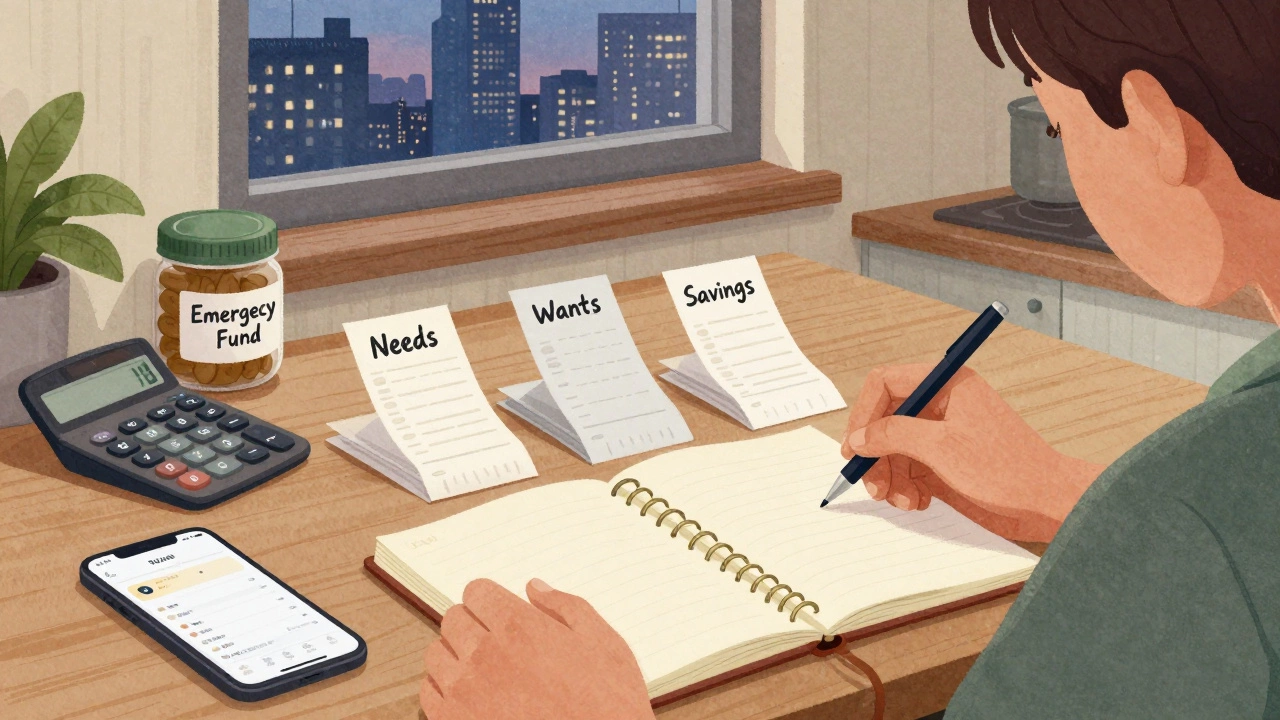
You don’t need an app. You don’t need a spreadsheet. Just grab a pen and follow these steps:
- Calculate your monthly after-tax income.
- List every expense for the last 30 days.
- Categorize each as Need, Want, or Savings/Debt.
- See where you stand. Are you at 60/40/0? 40/50/10?
- Adjust one thing this week. Maybe cancel a subscription. Maybe move $100 from wants to savings.
Don’t try to fix everything at once. The goal isn’t perfection-it’s progress.
Why This Rule Works When Others Don’t
Most budgeting methods fail because they’re too rigid. They say “cut all dining out” or “never spend on clothes.” That’s not sustainable.
The 50/30/20 rule works because it gives you permission to live. You get to enjoy your life while still building security. It’s not about deprivation-it’s about intention.
People who use this rule report less stress, more confidence, and fewer arguments about money with partners. Why? Because it’s fair. It’s clear. And it leaves room for joy.
Is the 50/30/20 rule right for low-income earners?
Yes, but you may need to adjust the percentages. If your needs take up 70% of your income, focus on reducing wants and finding ways to increase income-even small side gigs help. The goal is to protect your savings portion, even if it’s just 5% at first. Every dollar saved is a step forward.
Do I include retirement contributions in the 20%?
Yes. Retirement savings like 401(k), IRA, or Roth IRA counts fully in the 20% savings bucket. Employer matches are a bonus-they don’t count toward your 20%, but they help you reach your goal faster.
What if I have student loans or medical debt?
Any debt with interest-student loans, medical bills, personal loans-belongs in the 20% savings/debt bucket. Paying more than the minimum counts as savings because it reduces future interest and frees up future cash flow. Treat debt repayment like investing in yourself.
Should I use a budgeting app with this rule?
Apps like YNAB, Mint, or EveryDollar can help track your spending automatically, but they’re not required. You can do this with a notebook, spreadsheet, or even just your phone’s notes app. The rule works whether you’re tech-savvy or not.
Can I use this rule if I’m self-employed?
Yes. Use your average monthly net income after business expenses and taxes. Since income varies, average your last 6-12 months. Then apply the same 50/30/20 split. You’ll need to be more disciplined about setting aside taxes, but the rule still applies.
Next Steps
Start small. This week, calculate your after-tax income. Write down every dollar you spent. Sort it into needs, wants, and savings. Don’t judge-just see.
Then pick one thing to change. Maybe you stop buying lunch every day. Maybe you cancel a subscription you haven’t used. Maybe you move $50 from your spending account to a separate savings account.
That’s it. You’re already doing better than 90% of people who never even tried.