
Credit Score Impact Calculator
Potential credit score change
-
Credit utilization ratio
-
Key takeaway: Your score can recover in 6-12 months with consistent on-time payments.
Tip: Keep old accounts open to maintain credit history length. Avoid new credit applications during consolidation.
When you’re juggling multiple credit cards, personal loans, or medical bills, the idea of debt consolidation sounds like a lifeline. Combine all your debts into one payment, lower your interest rate, and finally get ahead. But there’s a quiet fear lurking underneath: does debt consolidation hurt your credit? The short answer? It can, but not always-and not forever. What really matters is how you do it.
How Debt Consolidation Works
Debt consolidation means taking out one new loan to pay off several smaller ones. Instead of five monthly payments with different due dates and interest rates, you get one. The goal is to simplify your finances and often reduce the total interest you pay over time.
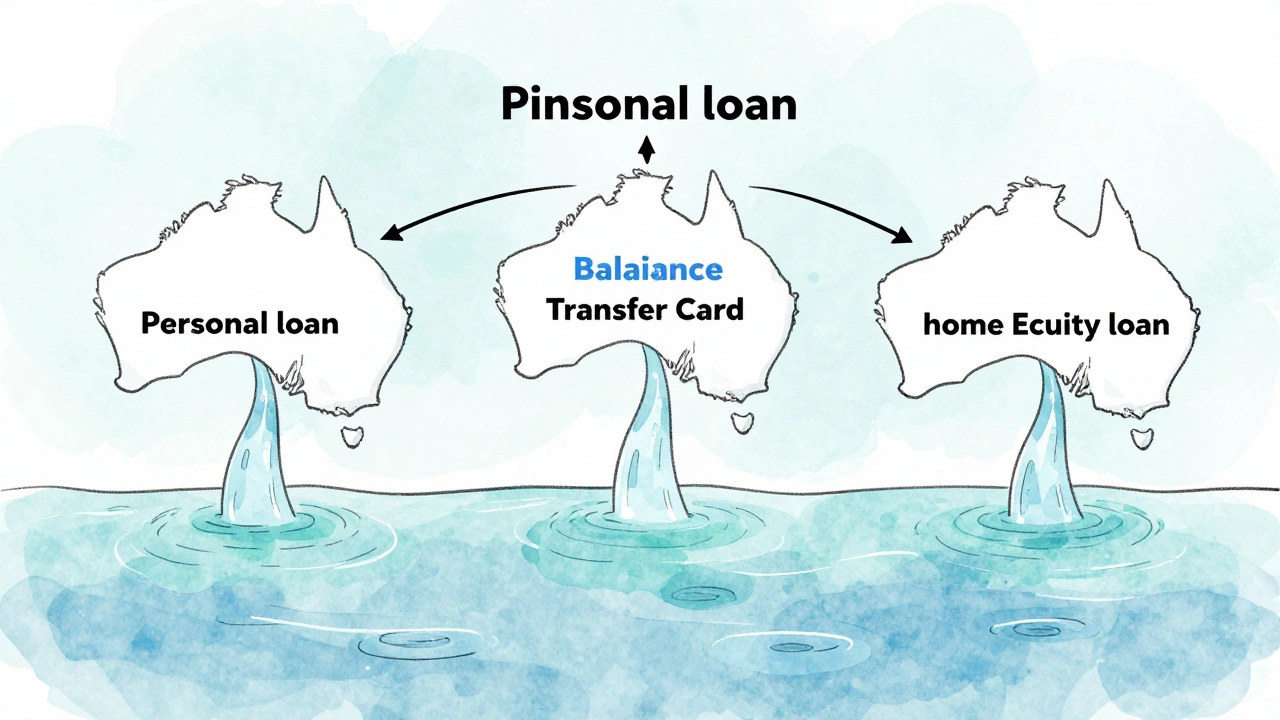
In Australia, people commonly use three methods:
- A personal loan from a bank or credit union
- A balance transfer credit card with a 0% introductory rate
- A home equity loan or line of credit (if you own property)
Each has pros and cons. But no matter which path you choose, the process touches your credit in measurable ways. Let’s break them down.
The Credit Check That Can Lower Your Score
When you apply for a personal loan or a balance transfer card, the lender checks your credit report. That’s called a hard inquiry. Each one can knock 5 to 10 points off your credit score, and it stays on your report for two years. If you apply to three lenders in a month, you could see a 20- to 30-point drop-just from the applications.
But here’s the twist: credit scoring models in Australia (like Equifax and Illion) treat multiple inquiries for the same type of loan within 14 days as a single event. So if you’re shopping around for the best rate, do it all in two weeks. That way, you avoid multiple hits.
That’s not the only problem. If you’re approved for a new loan but still keep your old credit cards open, you might be tempted to use them again. Suddenly, you’ve got the same debt plus new spending. That’s how people end up with double the debt-and a worse credit score than before.
How Closing Accounts Changes Your Credit Mix
When you pay off your credit cards with a consolidation loan, you might close those accounts. It feels like a clean slate. But closing old accounts can hurt your credit in two ways.
First, your credit utilization ratio goes up. This is the percentage of your available credit you’re using. If you had $15,000 in total credit limits across three cards and were using $5,000, your utilization was 33%. If you close two of those cards and now only have $5,000 total limit, your utilization jumps to 100%. That’s a red flag to lenders.
Second, you lose credit history length. Your credit score rewards long-standing accounts. The average age of your accounts matters. Closing a 10-year-old card can drag down your overall history, even if you’re still using other cards. That’s why experts recommend keeping old accounts open-even if you don’t use them-after paying them off with a consolidation loan.
Payment History Still Rules
Here’s the most important thing: your payment history makes up 35% of your credit score in Australia. That’s more than anything else.
If you were late on two credit cards last year, those missed payments are still on your report. Consolidation doesn’t erase them. But if you start making on-time payments on your new loan? That’s the real game-changer. Every single on-time payment for six months starts to rebuild your score. After a year of perfect payments, your score can jump back up-even if you took a dip at first.
Think of it like this: debt consolidation doesn’t fix your past mistakes. But it gives you a better tool to fix your future ones.
When Consolidation Helps Your Credit
It’s not all bad. In fact, when done right, debt consolidation can be one of the best moves for your credit.
Take Sarah, a 34-year-old teacher from Melbourne. She had $18,000 spread across four credit cards. Her interest rates ranged from 19.9% to 24.9%. She was paying $700 a month just to keep up. Her credit score was 580. She got a personal loan for $18,000 at 11.5% with a five-year term. Her new payment? $395 a month.
She kept her credit cards open but stopped using them. She set up automatic payments. Six months later, her credit utilization dropped from 82% to 21%. A year later, her score hit 710. She wasn’t just less stressed-she was now eligible for a home loan.
That’s the real power of consolidation: it turns chaos into control. And control builds credit.
Red Flags That Mean Trouble
Not every consolidation plan works. Here are the biggest mistakes people make:
- Using the new loan to pay off cards, then maxing out the cards again
- Choosing a loan with a longer term just to lower the monthly payment-ending up paying more in interest
- Using a home equity loan without a solid plan to avoid future debt
- Applying for multiple loans at once, triggering too many hard inquiries
Also, watch out for debt consolidation companies that charge upfront fees. In Australia, legitimate lenders don’t require payment before they lend. If someone asks for a “processing fee” or “counselling fee” before approving your loan, walk away. That’s a scam.

What to Do Instead
If you’re not sure consolidation is right, here are three alternatives:
- Debt management plan: Work with a nonprofit credit counselling agency (like MoneySmart or Financial Counselling Australia). They negotiate lower rates with creditors and bundle payments for you-no new loan needed.
- Balance transfer card: If you have good credit, move high-interest debt to a 0% card for 12 to 24 months. Pay it off before the rate jumps. Watch for transfer fees (usually 1-3%).
- Debt snowball: Pay off the smallest debt first, then roll that payment into the next. It’s psychological-you get quick wins that keep you motivated.
Each option has trade-offs. But none of them require you to take on new debt unless you’re ready to stick to the plan.
How Long Does It Take to Recover?
If your credit score drops after consolidation, don’t panic. Recovery isn’t instant, but it’s faster than you think.
Most people see their score bounce back within 6 to 12 months if they:
- Make every payment on time
- Keep credit card balances under 30% of their limit
- Don’t open new credit accounts
- Check their credit report for errors
Equifax and Illion allow you to get a free credit report every year. Use it. Look for old accounts still listed as unpaid, or late payments that were already settled. Dispute anything wrong. Fixing a single error can boost your score by 50 points or more.
Final Thought: It’s About Behavior, Not the Loan
Debt consolidation doesn’t hurt your credit. Bad habits do. A loan is just a tool. If you use it to stop spending and start paying, it helps. If you use it to keep spending, it makes things worse.
The real question isn’t whether consolidation hurts your credit. It’s whether you’re ready to change how you handle money. Because if you are? That’s the kind of change that builds lasting credit-and lasting freedom.
Does debt consolidation show up on my credit report?
Yes. When you take out a consolidation loan, it appears as a new account on your credit report. Your old accounts will show as paid off, but they’ll still be listed with a zero balance. This helps show lenders you’ve taken control of your debt. If you miss payments on the new loan, that will also appear and hurt your score.
Can I consolidate debt if I have a poor credit score?
It’s harder, but not impossible. If your credit score is below 550, you may still qualify for a secured personal loan or a loan from a credit union that considers your income and employment history. Some lenders offer debt consolidation loans specifically for people with bad credit-but expect higher interest rates. Always compare options carefully. Avoid payday lenders or unlicensed lenders-they often trap you in deeper debt.
Will debt consolidation remove negative marks from my credit report?
No. Late payments, defaults, or collections from your past debts will stay on your report for five years in Australia. Consolidation doesn’t erase them. But if you make timely payments on your new loan, those positive actions will gradually outweigh the old negatives. Your score will improve over time, even with the past marks still visible.
Should I close my credit cards after consolidating?
It’s better to keep them open. Closing cards reduces your total available credit, which can raise your credit utilization ratio and lower your score. Instead, cut up the cards or lock them away. Use them only in emergencies, if at all. Keeping them open helps your credit history and utilization ratio-even if you don’t use them.
How long does it take to improve my credit score after consolidation?
You can start seeing improvements in as little as 6 months if you make all payments on time and keep your credit card balances low. Full recovery often takes 12 to 18 months. The key is consistency. One missed payment can undo months of progress. Stay disciplined, and your score will climb.