

Remortgaging Cash Calculator
Cash-Out Remortgaging Calculator
Calculate how much cash you can access through cash-out remortgaging based on your current home value and mortgage details.
Your Results
Fees Estimate
Remortgaging typically costs $8,000-$10,000 including arrangement, valuation, and legal fees.
Important Considerations
When you hear someone say they remortgaged to get cash, it sounds simple: remortgaging = free money. But that’s not the whole story. Remortgaging doesn’t hand you cash like a vending machine. It’s a financial move - one that can give you cash, but only if you have enough equity and the right reasons to do it. And it’s not without risks.
What Is Remortgaging?
Remortgaging means switching your existing mortgage to a new deal - usually with a different lender, but sometimes with the same one. It’s not a new loan. It’s a replacement. You’re not borrowing extra money just because you feel like it. You’re refinancing what you already owe.
Think of it like this: You bought a house five years ago with a 5% interest rate. Today, rates are at 3.2%. Your home’s value jumped from $250,000 to $350,000. You’re paying more in interest than you need to, and you’ve built up equity. Remortgaging lets you lock in that lower rate and possibly take out some of the equity you’ve earned.
How Do You Get Cash From Remortgaging?
You don’t get cash by just switching lenders. You get cash when you borrow more than what you currently owe.
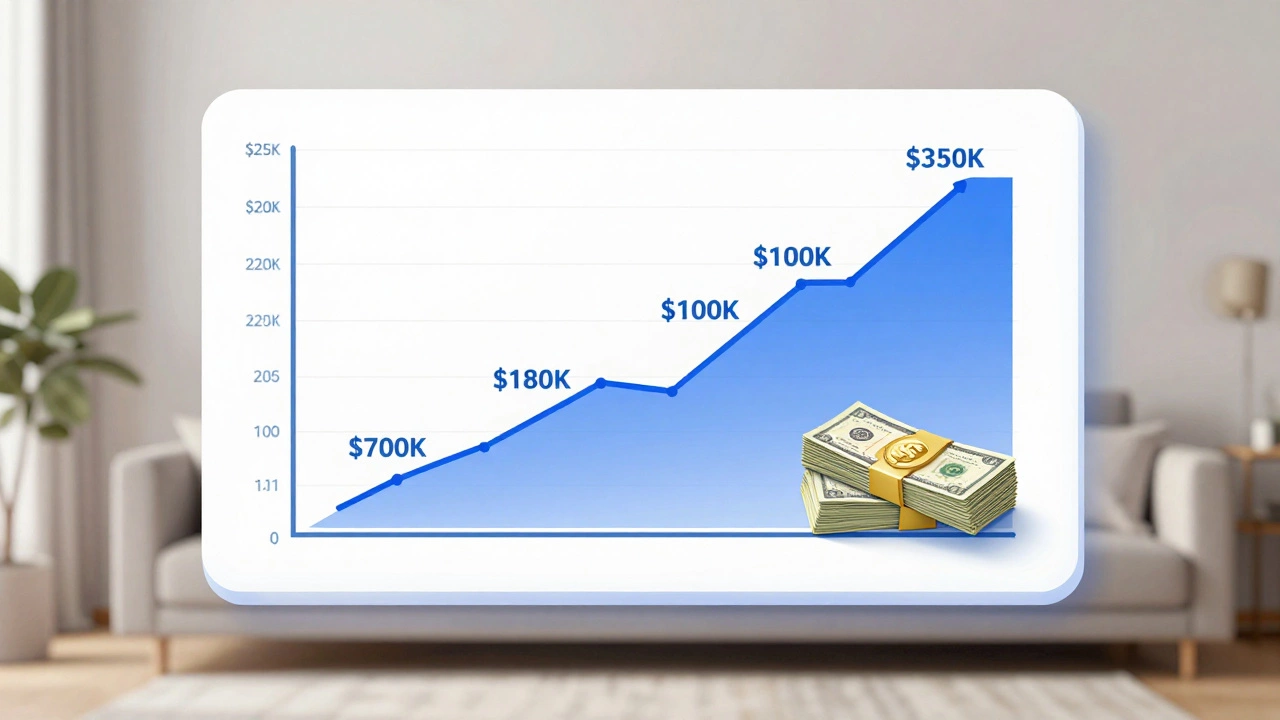
Let’s say you still owe $180,000 on your mortgage. Your house is now worth $350,000. That gives you $170,000 in equity. If you remortgage and take out a new loan for $250,000, you’re using $70,000 of that equity as cash. The lender pays off your old $180,000 debt, and gives you the leftover $70,000 in your bank account.
This is called cash-out remortgaging. It’s the only way remortgaging gives you cash. And it’s not automatic. Lenders don’t just hand it over. They check your income, credit score, debt-to-income ratio, and how much equity you actually have.
How Much Equity Do You Need?
Lenders typically require you to keep at least 20% equity in your home after the new loan. That’s called the loan-to-value ratio (LTV).
For example:
- Your home is worth $350,000
- You owe $180,000
- Your equity: $170,000 (48.5% of home value)
If the lender allows up to 80% LTV, they’ll lend you up to $280,000. You can take out $100,000 in cash ($280,000 new loan - $180,000 existing debt). But if you only had $100,000 in equity, you’d be capped at $60,000 cash out.
Some lenders may go up to 90% LTV, but those deals usually come with higher rates or fees. The more you borrow, the riskier it looks to them.
Why Do People Use Cash-Out Remortgaging?
People don’t do this just for a vacation. Most use the cash for specific, high-value needs:
- Home improvements - Kitchen remodels, roof replacements, adding a room. These often increase your home’s value.
- Debt consolidation - Paying off high-interest credit cards or personal loans. If your mortgage rate is lower, you save money.
- Education or medical costs - Tuition, surgery, or long-term care not covered by insurance.
- Investments - Buying rental property, starting a business, or funding a side hustle.
Here’s the catch: If you use the cash for something that doesn’t add value - like a luxury car or a trip - you’re increasing your debt without building anything back. That’s where people get stuck.
What Are the Real Costs?
Remortgaging isn’t free. You’ll pay:
- Arrangement fees - $1,000 to $2,500, depending on the deal
- Valuation fees - $300 to $600
- Legal fees - $800 to $1,500
- Early repayment charges - If you’re still in a fixed-rate term, you might pay 1% to 5% of your outstanding balance
On a $180,000 mortgage with a 3% early repayment charge? That’s $5,400 just to leave your current deal. Add in other fees - you’re looking at $8,000 to $10,000 total.
That means you need to save enough on interest to cover those costs. If you’re only saving $100 a month, it’ll take 8 years to break even. That’s not worth it unless you plan to stay in the house long-term.
Is It Better Than Equity Release?
Some people confuse remortgaging with equity release. They’re not the same.
Equity release (like a lifetime mortgage) is designed for older homeowners - usually 55+. You don’t make monthly payments. The debt grows over time and is paid back when you die or move into care. It’s not for cash today - it’s for long-term financial support.
Remortgaging? You still make monthly payments. You’re still responsible for the full amount. It’s a new mortgage. Not a loan against your future.

When Remortgaging for Cash Is a Bad Idea
It’s not always smart. Avoid it if:
- You’re planning to move in the next 3 years
- Your income dropped or you lost your job
- You’re using the cash for non-essential spending
- Your home value dropped below what you owe (negative equity)
- You already have high monthly debts
One real example: A homeowner in Ohio remortgaged in 2023 to pull out $40,000 for a new car. Rates rose to 6.5% by 2025. Their monthly payment jumped from $1,100 to $1,800. The car lost value. The house didn’t. They ended up underwater on both.
What You Should Do Instead
If you need cash but aren’t sure about remortgaging:
- Check if you can get a home equity line of credit (HELOC) - it’s flexible, you only pay interest on what you use
- Look at a personal loan - lower risk, fixed term, no collateral
- Use savings or investments - if you have them
- Delay the expense - wait until rates drop or your income improves
Remortgaging for cash should be a strategic decision - not a quick fix.
Final Reality Check
Yes, remortgaging can give you cash. But only if:
- You have at least 20% equity
- You’re staying in the home for 5+ years
- You’re using the money for something that adds value
- You can afford the higher monthly payments
- You’ve compared rates and fees across at least three lenders
It’s not magic. It’s math. And if the math doesn’t add up, don’t do it.
Can I remortgage to get cash if I have bad credit?
It’s harder, but not impossible. Lenders who specialize in bad credit mortgages exist, but they’ll charge higher interest rates and require more equity - often 30% to 40%. You’ll also face stricter income checks. If your credit score is below 620, you might be better off fixing your credit first or using a personal loan.
How long does remortgaging take to get cash?
Typically 4 to 8 weeks. The process includes application, valuation, underwriting, legal work, and funds transfer. If you’re switching lenders, expect delays. If you’re staying with your current lender, it can be as fast as 2 weeks. Don’t plan to use the cash for time-sensitive expenses unless you’ve planned ahead.
Do I pay taxes on the cash I get from remortgaging?
No, the cash you get from remortgaging isn’t taxable income. The IRS treats it as a loan, not income. But if you later sell your home and don’t repay the extra amount you borrowed, that could affect your capital gains calculation. Always talk to a tax advisor if you’re using the cash for investments or business.
Can I remortgage more than once?
Yes, you can remortgage multiple times. But each time, you’ll pay fees and possibly early repayment charges. Most people do it once every 5 to 7 years - usually when rates drop or their financial situation changes. Doing it too often can cost you more than you save.
What’s the difference between remortgaging and refinancing?
In the U.S., "refinancing" is the common term. In the UK and other countries, it’s called "remortgaging." They mean the same thing: replacing your existing mortgage with a new one. The only difference is language. Both can be done to lower your rate, change your term, or take out cash.