

When you hear "remortgaging," it sounds like magic money from nowhere. You’ve been paying your mortgage for years, your home’s value went up, and suddenly someone tells you you can get cash out just by switching lenders. But does remortgaging actually give you money? Or is it just moving debt around with extra fees? Let’s cut through the noise.
What remortgaging really means
Remortgaging is when you switch your existing mortgage to a new deal-either with your current lender or a different one. It’s not a second loan. It’s not a personal loan. It’s replacing your current mortgage terms with new ones. The most common reasons people do it? To get a lower interest rate, fix monthly payments, or release equity.
Here’s the key: remortgaging doesn’t create money. It just rearranges what you already own-your home’s equity. If your house is worth $400,000 and you still owe $200,000, you have $200,000 in equity. That’s not cash in your pocket. But when you remortgage, you can borrow against that equity.
How you get cash from remortgaging
You don’t get money just by switching lenders. You get cash only if you take out a larger mortgage than what you currently owe. For example:
- You owe $180,000 on your current mortgage.
- You remortgage for $250,000.
- The lender pays off your old $180,000 debt.
- You get the remaining $70,000 in cash.
This is called cash-out remortgaging. It’s not free money. You’re borrowing more. Your monthly payments go up. Your total interest over time goes up. And if your home value drops later, you could end up owing more than it’s worth.
In 2025, the average cash-out remortgage in the U.S. was $42,000. Most people used it for home improvements (42%), debt consolidation (31%), or major life expenses like medical bills or education (22%). Only 5% used it for vacations or luxury purchases.
When remortgaging makes sense
It’s not about getting "free" money. It’s about using your home’s value to solve a financial problem more efficiently than other options.
Let’s say you have $25,000 in credit card debt at 22% interest. Your monthly payments are $700. You remortgage and pull out $25,000 to pay it off. Your new mortgage rate is 5.5%. Your new monthly payment? $140. You save $560 a month. That’s real money.
Another case: You need a new roof. The cost is $30,000. You don’t have savings. A personal loan would cost you 9% interest over 7 years. Remortgaging lets you borrow it at 5.2%, spread over 25 years. You pay less each month and save thousands in interest.
These aren’t rare scenarios. In 2024, over 1.2 million homeowners in the U.S. remortgaged to consolidate debt. That’s up 38% from 2021. Rates stayed low enough to make it worth the upfront cost.
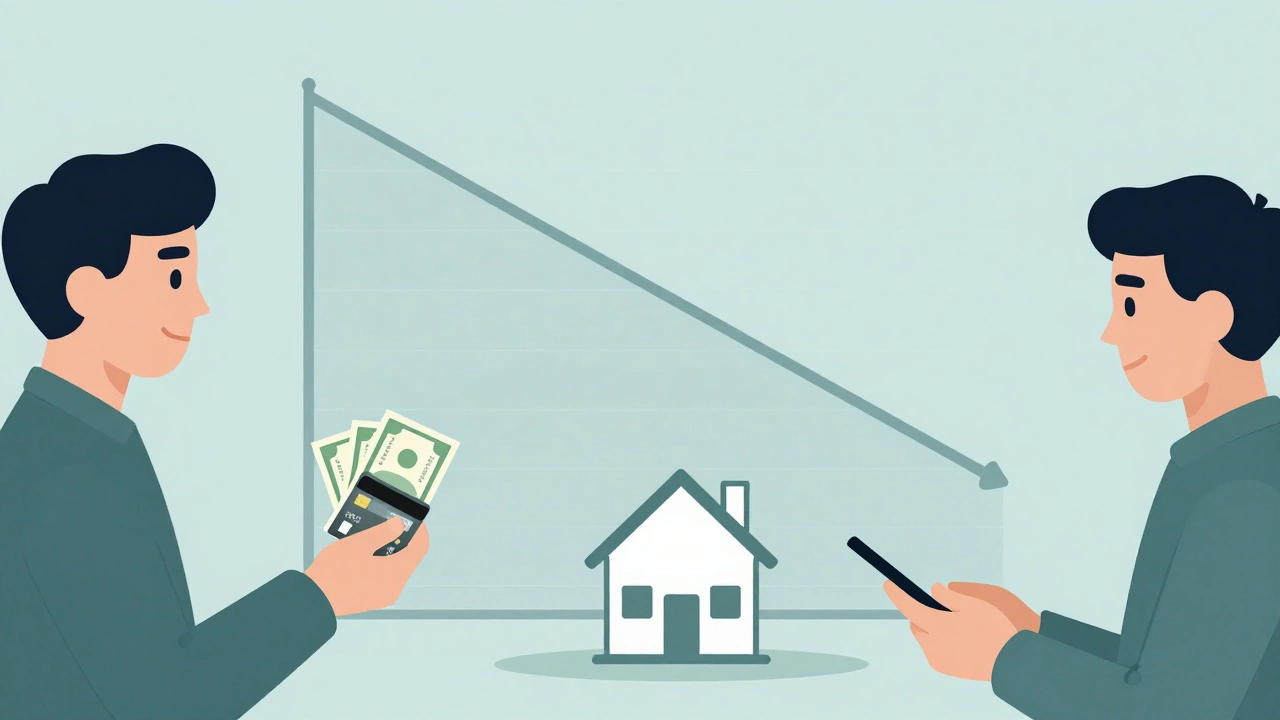
When remortgaging backfires
It’s easy to think, "I got $50,000-perfect!" Then you spend it on a new car, a trip to Bali, or gambling. Six months later, you’re back in debt, now with a bigger mortgage.
Here’s what happens when you misuse remortgaging:
- You trade short-term pain for long-term pain.
- You extend your debt from 5 years to 30 years.
- You pay more in interest over time-even if your monthly payment drops.
- You risk losing your home if you can’t keep up with payments.
One study from the Federal Reserve in 2023 tracked 18,000 homeowners who remortgaged for cash between 2020 and 2022. Those who used the money for non-essential spending were 3.5 times more likely to fall behind on payments within two years.
Costs you can’t ignore
Remortgaging isn’t free. Even if you find a "no fee" deal, there are hidden costs:
- Appraisal fee: $300-$600
- Legal/processing fees: $800-$1,500
- Early repayment charge (if leaving a fixed deal): 1%-5% of your loan balance
- Arrangement fee: $0-$2,000
- Valuation fee: $200-$400
On a $250,000 mortgage, these fees can add up to $4,000. That’s money you need to recoup through savings. If you’re only saving $50 a month on payments, it’ll take 6 years to break even. If you plan to move in 3 years? You lose.
Always calculate your break-even point: Total fees ÷ Monthly savings = Months to break even. If it’s longer than how long you plan to stay in the home, skip it.

Is remortgaging better than equity release?
Some older homeowners consider equity release-like a lifetime mortgage-instead. But they’re not the same.
Equity release is designed for people 55+, doesn’t require monthly payments, and usually increases your debt over time. Remortgaging is for anyone who owns a home and wants to refinance. You still pay monthly. You still have to qualify based on income and credit.
If you’re under 60 and still working, remortgaging is almost always the better option. Equity release is for those who need cash now and don’t plan to leave an inheritance.
What to do before you remortgage
Don’t rush. Here’s what to check first:
- Check your home’s current value. Use Zillow, Redfin, or a local agent. Don’t guess.
- Know your exact mortgage balance. Call your lender. Don’t rely on your last statement.
- Calculate your loan-to-value ratio. Divide your mortgage balance by your home’s value. If it’s over 80%, you might pay private mortgage insurance (PMI).
- Compare at least three lenders. Use a broker or online comparison tool. Rates vary wildly.
- Ask for a full breakdown of all fees. No vague "administrative charges."
- Run the numbers: How much will you save monthly? How long to recover fees?
Most people who do this right save $200-$500 a month. Those who skip the steps? They end up paying more in the long run.
Bottom line
Remortgaging doesn’t give you money. It gives you access to money you already own-your home’s equity. You can use it to save money, pay off expensive debt, or fund necessary repairs. But if you treat it like a cash machine, you’ll regret it.
The real question isn’t "Can I get cash?" It’s "Should I?" And the answer depends on your numbers, your goals, and your discipline.
Do the math. Compare options. Don’t let a salesperson talk you into it. If the numbers don’t clearly work in your favor, walk away. Your home isn’t an ATM. It’s your biggest asset-and your biggest responsibility.
Does remortgaging affect my credit score?
Yes, but temporarily. When you apply, the lender checks your credit, which causes a hard inquiry-this can drop your score by 5-10 points. If you’re approved and pay on time afterward, your score will recover and likely improve. But if you take on more debt and miss payments, your score will suffer long-term.
Can I remortgage if I have bad credit?
It’s harder, but not impossible. Most lenders require a credit score of at least 620. If you’re below that, you’ll likely face higher interest rates or need a larger down payment. Some specialist lenders work with borrowers in the 580-619 range, but they charge more and offer fewer options. Improving your score even 20-30 points before applying can save you thousands.
Is remortgaging better than a personal loan?
It depends. Personal loans have fixed terms (usually 2-7 years) and higher interest rates (7-18%). Remortgaging spreads payments over 15-30 years with lower rates (4-7%). If you need $10,000 and can pay it off in 3 years, a personal loan might be cheaper. If you need $50,000 and want lower monthly payments, remortgaging wins. Always compare total cost, not just monthly payment.
How soon can I remortgage after getting a mortgage?
Technically, you can remortgage anytime. But if you’re still in a fixed-rate deal, you’ll likely pay an early repayment charge-often 1%-5% of your loan balance. Most people wait until their fixed term ends (usually 2, 3, or 5 years). If you’re on a variable rate, you can switch anytime without penalty.
Can I remortgage to pay off student loans?
Yes, and many people do. Federal student loans in the U.S. have interest rates between 5% and 7%. If you can remortgage at 5.5% and roll $30,000 in student debt into your mortgage, you’ll lower your monthly payment significantly. But you’ll be paying that debt for 25-30 years instead of 10. Only do this if you’re confident you can afford the longer term and won’t need flexibility later.