
ISA Cost Calculator
Calculate Your ISA Costs
See how much you could lose to fees, low interest rates, or missed opportunities.
Input Your Details
Your Cost Breakdown
Cost Comparison
Opening an ISA doesn’t cost anything upfront - but that doesn’t mean it’s free. Many people assume an ISA is like a regular savings account where you just deposit money and forget about it. But the truth is, how much you end up paying depends on what kind of ISA you choose, where you open it, and how you use it. Let’s cut through the noise and show you exactly what you’re signing up for.
There’s No Fee to Open an ISA - But That’s Not the Whole Story
You can open an ISA with zero setup fee at nearly every major UK bank, building society, or online provider. Providers like Nationwide, Halifax, Fidelity, and Moneybox all let you sign up online in under 10 minutes with no charge. So if someone tells you there’s a fee just to open the account, they’re wrong. The government doesn’t charge you. The provider doesn’t charge you. It’s truly free to open.
But here’s where people get tripped up: the real cost comes later. Not in fees, but in missed opportunities, hidden charges, or poor returns.
What Actually Costs Money in an ISA?
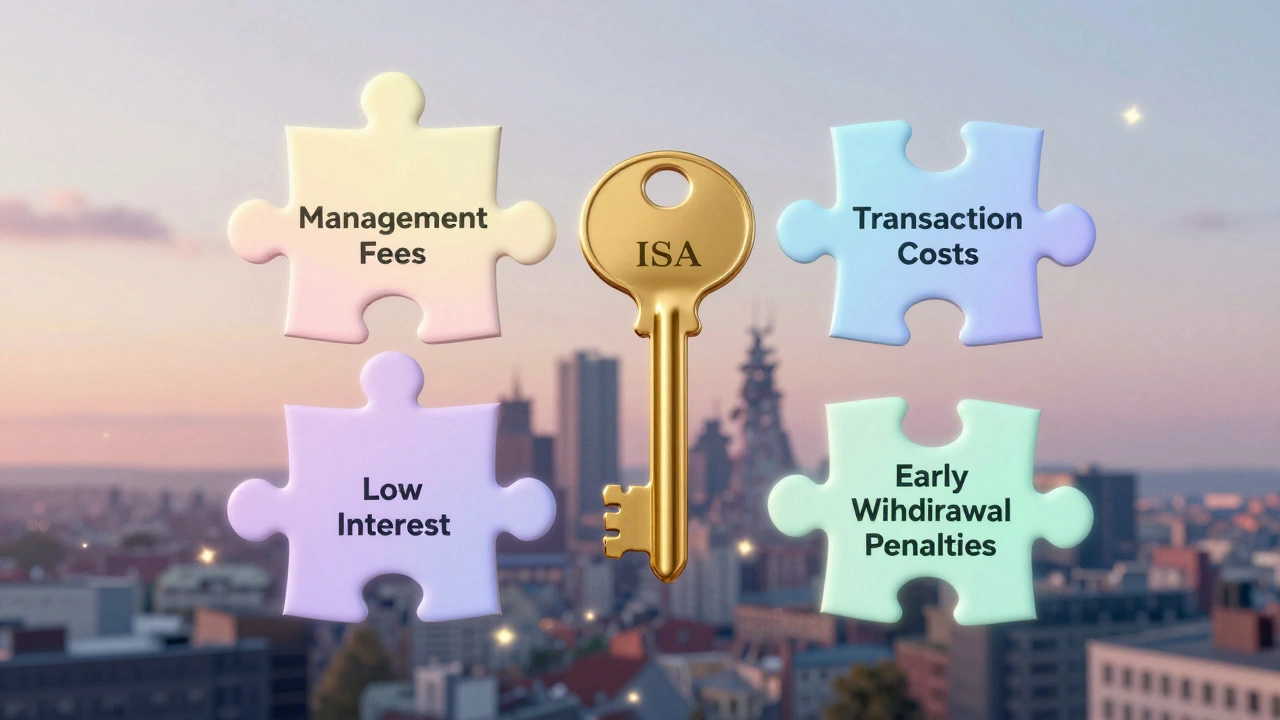
There are four main ways an ISA can cost you money - even if you never see a direct bill.
- Management fees - Some ISA providers, especially investment ISAs, charge an annual fee. These can range from 0.25% to 1.5% of your total balance. If you have £20,000 in a stocks and shares ISA with a 1% fee, that’s £200 a year just for keeping it open.
- Transaction fees - If you’re buying or selling funds, shares, or ETFs inside your ISA, you might pay £5 to £15 per trade. Some providers charge per trade; others charge a flat monthly fee. Always check the fine print.
- Low interest rates - Cash ISAs often pay less than 1% interest. If inflation is at 3%, you’re losing money in real terms. A cash ISA with 0.5% interest isn’t a savings tool - it’s a money trap.
- Penalties for early withdrawal - Some fixed-rate cash ISAs lock your money in for a year or more. If you pull it out early, you might lose months of interest. It’s not a fee, but it feels like one.
One 2025 survey by the Financial Conduct Authority found that 62% of ISA holders didn’t know their provider charged fees - until they got their annual statement.
Types of ISAs and Their Hidden Costs
Not all ISAs are the same. The type you pick changes how much it costs - or doesn’t.
| ISA Type | Typical Annual Fee | Trade Fees | Interest Rate (Cash) | Best For |
|---|---|---|---|---|
| Cash ISA | £0 | N/A | 0.5% - 2.5% | Savers who want safety |
| Stocks and Shares ISA | £0 - £150 | £0 - £15 per trade | N/A | Investors with 5+ year horizon |
| Innovative Finance ISA | £0 - £50 | £0 - £10 per trade | N/A | Peer-to-peer lenders |
| Lifetime ISA | £0 | £0 - £15 per trade | 0.5% - 1.5% | First-time homebuyers under 40 |
Notice something? The Lifetime ISA has no management fee - but if you withdraw for anything other than buying a home or retirement, you lose the government bonus AND pay a 25% penalty. That’s a hidden cost that can wipe out your savings.
How to Avoid Paying More Than You Need To
You don’t need to pay extra just because you’re using an ISA. Here’s how to keep your costs low:
- Compare interest rates - Use comparison sites like MoneySavingExpert or Moneyfacts. A 1.5% cash ISA isn’t rare anymore. You can find 2.5% with no strings attached.
- Choose a zero-fee investment ISA - Providers like Fidelity, Vanguard, and AJ Bell offer £0 annual fees and £0 trading fees on certain funds. These are perfect if you’re investing for the long term.
- Don’t overcomplicate it - If you’re not actively trading, don’t pick an ISA with complex fee structures. A simple cash ISA with no fees and decent interest is better than a fancy one with hidden charges.
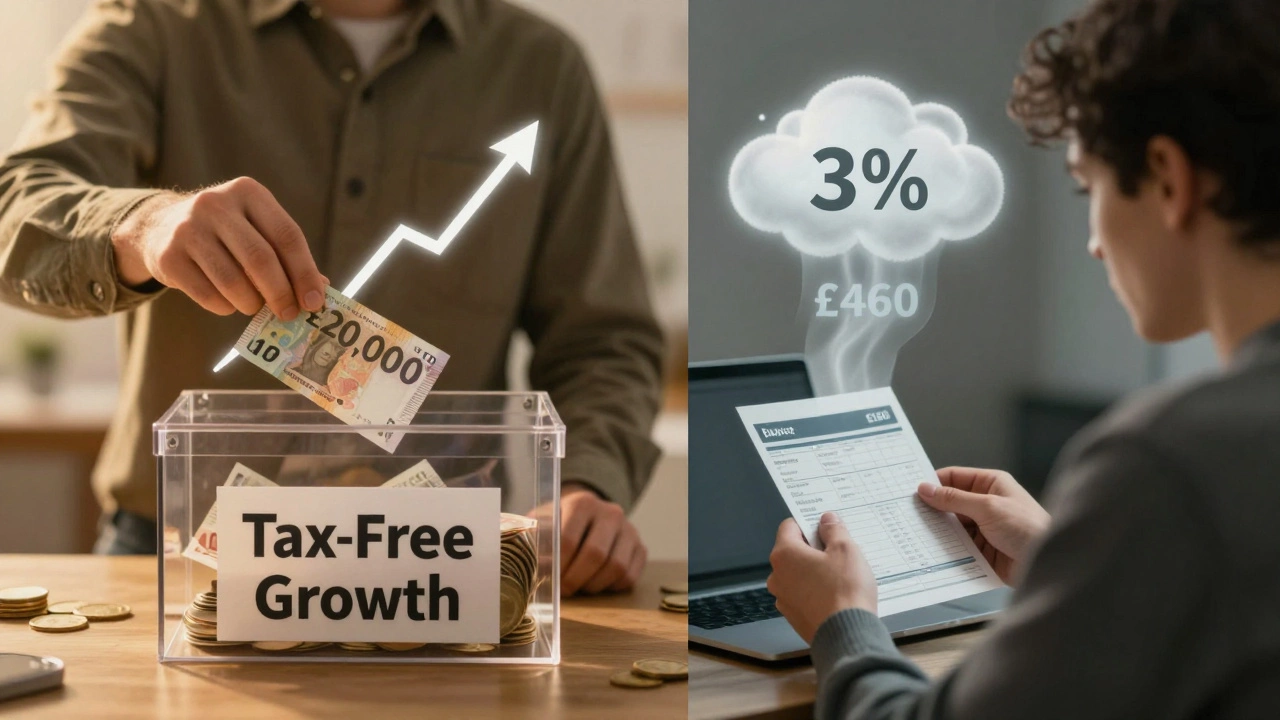
- Use your full allowance - The 2025/26 ISA allowance is £20,000. If you only put in £5,000, you’re leaving £15,000 of tax-free growth on the table. That’s a bigger cost than any fee.
What Happens If You Don’t Pay Attention?
Let’s say you opened a cash ISA with a bank in 2022 because it was offering 2.1%. You forgot about it. In 2026, the rate dropped to 0.8%. You’re still earning £160 on £20,000 - but inflation is at 3%. You’re losing £460 in real value every year. That’s not a fee. But it’s costing you more than any fee ever could.
Another common mistake: opening multiple ISAs in one year. You can only pay into one of each type per year. If you open two cash ISAs, one will be invalid. You might not get penalized, but you’ll miss out on the best rate because you’re spread too thin.
Who Shouldn’t Open an ISA?
It’s not for everyone. If you:
- Have high-interest debt (credit cards, personal loans) - pay that off first. The interest you save is better than any ISA return.
- Need quick access to cash - look at an easy-access savings account instead. Some ISAs lock your money.
- Don’t understand investing - a stocks and shares ISA isn’t a game. If you don’t know what an ETF is, stick with cash.
Also, if you’re not a UK resident, you can’t open an ISA. Non-residents who opened one before leaving must stop contributing. You can keep the account open, but you can’t add more money.
Bottom Line: It’s Free to Open. But It’s Not Free to Ignore.
Opening an ISA costs nothing. But letting it sit underperforming, paying unnecessary fees, or missing your allowance? That costs you thousands over time. The best ISA isn’t the one with the fanciest app or the biggest brand. It’s the one that fits your goals, has no hidden fees, and lets your money grow without dragging you down.
Check your current ISA. Look at the fee schedule. Compare it to three others. Move your money if needed. That’s the real cost of not acting - it’s not a fee. It’s lost time, lost interest, lost opportunity.
Can you open an ISA with £0?
Yes. Most ISA providers let you open an account with £0. You can start contributing later - even £10 a month counts toward your £20,000 annual allowance. The key is to open it now so you don’t miss out on the tax-free status.
Do all cash ISAs have low interest?
No. While many big banks offer poor rates, smaller providers and online-only banks often pay over 2%. Some even offer 3% for a limited time. Always shop around - your current bank isn’t your only option.
Is a stocks and shares ISA risky?
It can be - but not if you’re patient. If you invest for 10+ years, historical data shows you’re more likely to make money than lose it. The risk comes from selling during a downturn. If you leave it alone, volatility works in your favor.
Can I have more than one ISA at a time?
You can have multiple ISAs open, but you can only pay into one of each type per tax year. For example, you can have a cash ISA from Bank A and another from Bank B - but you can only put money into one of them this year. The other stays open but inactive.
What happens to my ISA if I move abroad?
You can keep your ISA open and continue to earn tax-free growth. But you can’t make new contributions after you become a non-resident. If you return to the UK, you can start contributing again.