

0% APR vs. Cash Discount Calculator
Enter Deal Details
Enter your details and click "Compare Deals"
See if the 0% interest really saves you money after dealer markups.
Walking into a dealership and seeing a bright sign that screams "0% APR Financing" feels like finding money in an old coat pocket. It’s tempting. It’s clean. It sounds like free money. But before you hand over your keys to the salesperson, you need to ask yourself: is this deal actually saving you cash, or are you just paying for the privilege of not paying interest?
In the current Australian market, where standard variable rates for new car loans hover between 6% and 8%, a zero-percent offer looks unbeatable on paper. However, finance deals are rarely about the headline number. They are about the total cost of ownership. To figure out if 0% APR is worth it for your specific situation, we have to peel back the layers of how these promotions work, who qualifies for them, and what dealers quietly add to the bill to make up for their lost profit.
The Math Behind the Magic: How Dealers Make Money
You might wonder, why would a bank or lender give you a loan with zero interest? They aren’t doing it out of charity. Lenders make money on loans through two main channels: interest payments and fees. When they eliminate interest, they shift the revenue model. Often, the manufacturer subsidizes the interest rate. Toyota, Ford, or Hyundai might pay the bank the interest portion so they can move metal off their lots quickly. This is common for slower-selling models or older stock from the previous year.
However, when the manufacturer isn’t fully subsidizing the deal, the dealer absorbs the loss by adjusting other parts of the transaction. This is where the concept of dealer markup comes into play. If you negotiate the price of the car down too much while taking 0% financing, the dealer might lose money on the deal entirely. To prevent this, many dealerships use "floor plan financing" incentives. Essentially, they keep the car price higher than the market average because the bank pays them a bonus for selling that specific unit with that specific finance package.
| Feature | 0% APR Promotion | Standard Loan / Cash Price |
|---|---|---|
| Interest Paid | $0 | Calculated at ~7-9% p.a. |
| Vehicle Purchase Price | Often inflated (MSRP) | Negotiable (often lower) |
| Eligibility | Strict (High credit score required) | Flexible |
| Loan Term Options | Fixed (usually 3-5 years) | Flexible (1-7 years) |
| Hidden Costs | Higher doc fees, mandatory accessories | Standard documentation fees |
So, the first rule of 0% financing is this: never accept the advertised price as final. You must negotiate the vehicle price separately from the financing terms. If you agree to the finance package first, you lose leverage. Ask for the "cash price" of the car first. Then, ask for the 0% rate. Compare the total out-the-door cost of both scenarios.
The Credit Score Trap: Who Actually Qualifies?
Not everyone gets the golden ticket. In Australia, lenders use your credit history to determine risk. A 0% APR offer is typically reserved for borrowers with excellent credit profiles. We’re talking credit scores above 750-800 on most major scoring models. If you have a thin file, recent late payments, or high debt-to-income ratio, the dealer will likely steer you toward a standard loan with interest rates ranging from 8% to 15%.
This creates a frustrating scenario. You walk in expecting a promo rate, but after the paperwork is done, you’re told you don’t qualify. By then, you’ve already invested time and emotional energy into the deal. To avoid this, check your pre-approval status with a few banks or credit unions before you step foot on the showroom floor. Knowing your exact rate allows you to compare it against the 0% offer objectively. If your pre-approved rate is 4.5%, the 0% offer saves you significant money. If your pre-approved rate is 9%, the savings are massive, but only if the car price remains competitive.
Hidden Fees and Add-Ons: The Fine Print
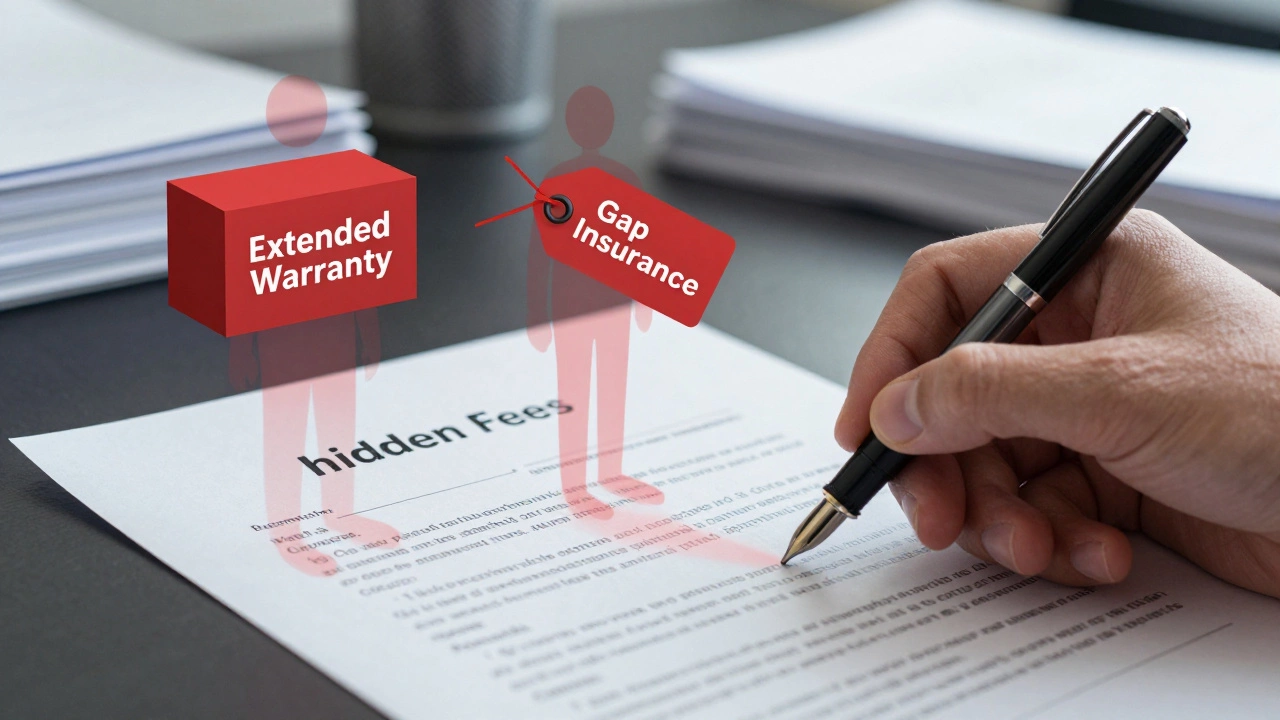
When interest disappears, fees often appear. Dealerships know that customers focused on the "0%" headline are less likely to scrutinize the bottom line of the contract. Watch out for these common tactics:
- Extended Warranties: Salespeople may push expensive extended service plans, claiming they are required for the 0% rate. They are almost never required. These plans can cost thousands of dollars and negate any interest savings.
- Gap Insurance: While Gap insurance is useful, bundling it into the loan increases the principal amount. Even at 0% interest, you are paying for coverage you might not need if you have comprehensive car insurance that includes gap cover.
- Documentation Fees: Some dealers increase their "doc fee" or "admin fee" significantly on promotional finance deals. A $500 fee on a standard deal might jump to $1,500 on a 0% deal. Always ask for a breakdown of all fees.
- Mandatory Accessories: Floor mats, paint protection, and window tinting are frequently added to the invoice without explicit consent. Check every line item on the purchase agreement.
To protect yourself, request a "zero-documentation-fee" quote or negotiate these costs down aggressively. Remember, the goal is to lower the total amount financed, not just the interest rate.
Opportunity Cost: What Could Your Money Do Elsewhere?
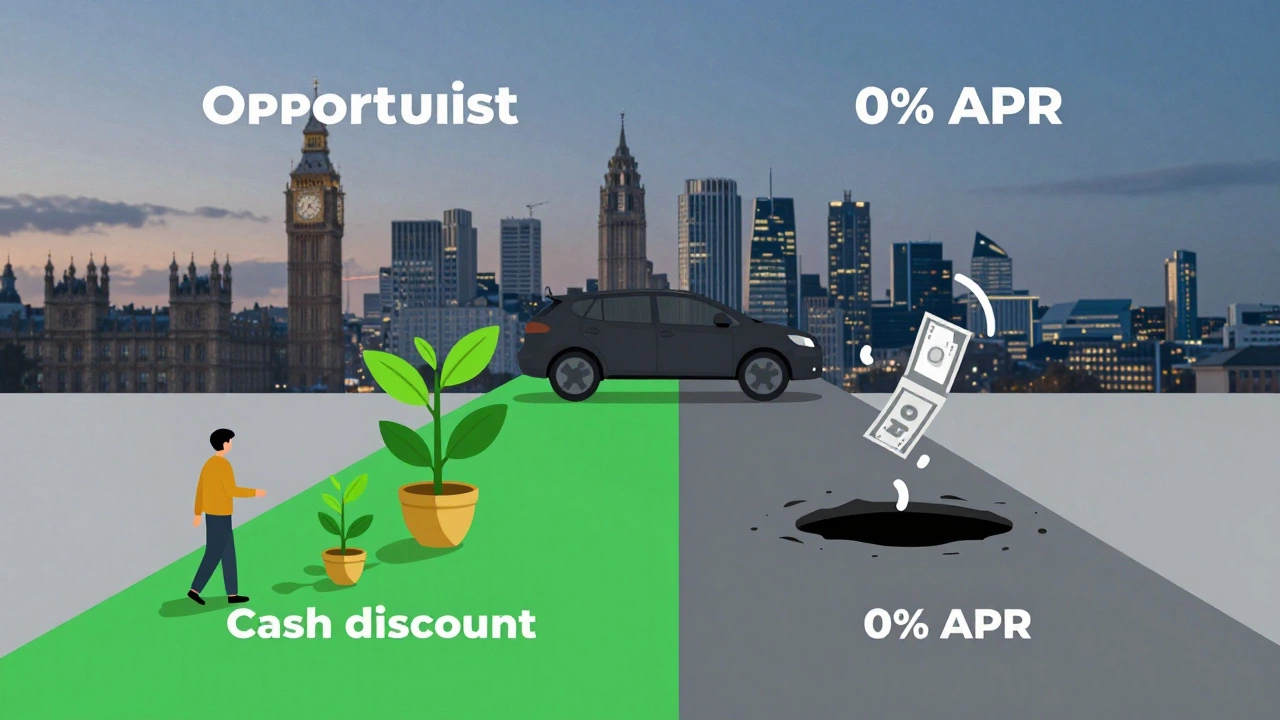
Here is a perspective that many buyers miss. Interest is the cost of borrowing money. But money also has an opportunity cost. If you take a 0% loan, you are keeping more cash in your pocket each month compared to a higher-interest loan. However, you are still tying up a large sum of capital in a depreciating asset-the car.
Consider this scenario: You buy a $40,000 car. With a 0% loan over five years, your monthly payment is roughly $666. With a 7% loan, the payment is around $792. The difference is $126 per month. Over five years, you save $7,560 in interest. That seems great. But what if you took the lower-rate loan, negotiated the car price down by $2,000, and invested the monthly savings of $126 plus the $2,000 upfront difference into a high-yield savings account or term deposit earning 4-5%?
In today’s economic climate, where inflation erodes the value of cash, locking money into a car loan-even a cheap one-means you aren’t growing your wealth. If you have access to a low-interest personal loan or a credit card with a balance transfer offer, sometimes it makes more financial sense to pay cash for the car (after negotiating a steep discount) and invest the rest. Calculate the "net present value" of your options. Don’t just look at the monthly payment; look at your net worth impact.
When Is 0% APR Actually Worth It?
Despite the caveats, there are specific situations where 0% APR is the clear winner. You should consider it if:
- You have a strong credit profile: You qualify easily without needing to stretch your budget.
- The car price is fair: You have negotiated the vehicle price down to market value, independent of the financing offer.
- You plan to keep the car long-term: If you drive the car for seven or eight years, the interest savings on a five-year loan become a permanent reduction in total cost of ownership.
- Cash flow is tight: Lower monthly payments help you manage other essential expenses, provided you aren’t adding costly add-ons to the loan.
Conversely, avoid 0% APR if the dealer refuses to budge on the price, forces you into unnecessary warranties, or if the loan term is excessively long (e.g., 72 months). A longer term means you pay more in fees and stay underwater on the loan balance for longer, which is risky if you need to sell the car early.
Alternatives to Consider
If you don’t qualify for 0% APR, or if the math doesn’t add up, explore these alternatives:
- Credit Union Loans: Credit unions often offer lower rates than big banks and have more flexible underwriting criteria. They are member-owned, so profits go back to members in the form of better rates.
- Pre-Owned Certified Vehicles: Sometimes used cars come with low-interest promos (e.g., 1.9% or 2.9%). Combined with a lower purchase price, this can be cheaper than a new car with 0% APR.
- Leasing: Leasing isn’t a loan, but it offers lower monthly payments. However, you don’t own the car at the end. Only choose leasing if you prefer changing cars every few years and driving within mileage limits.
Final Checklist Before Signing
Before you put pen to paper, run through this quick checklist to ensure you haven’t fallen into a trap:
- Have I negotiated the car price separately from the finance rate?
- Have I removed all unnecessary add-ons (warranties, GAP, accessories)?
- Is the documentation fee reasonable (under $500)?
- Do I understand the total payoff amount versus the monthly payment?
- Have I checked my credit score to ensure I’m getting the best rate available?
0% APR is a powerful tool, but it’s not a magic wand. It works best when you approach it with skepticism and a calculator in hand. By focusing on the total cost rather than the interest rate alone, you can secure a deal that truly saves you money, rather than just making the monthly payment look pretty.
Does 0% APR mean I pay no fees?
No. 0% APR only means you pay no interest on the borrowed amount. You will still pay documentation fees, government taxes, registration, and potentially dealer markups or accessory costs. Always review the total "out-the-door" price.
Can I get 0% APR with bad credit?
It is highly unlikely. Most 0% APR offers require a good to excellent credit score (typically 750+). Borrowers with poor credit will usually be offered higher interest rates, often between 10% and 20%, depending on the lender and risk assessment.
Is it better to take 0% APR or a cash discount?
It depends on the numbers. Calculate the total cost of the 0% APR deal (price + fees) versus the cash discount deal (lower price + interest paid over the loan term). If the interest savings on the 0% deal exceed the difference in the purchase price, choose 0% APR. Otherwise, take the cash discount.
What happens if I pay off my 0% APR loan early?
With true 0% APR loans, you owe only the principal balance remaining. There are usually no prepayment penalties. However, always check your contract for any early termination fees, though these are rare in promotional consumer auto loans.
Why do dealers push 0% APR so hard?
Dealers receive rebates or bonuses from manufacturers for selling cars with specific finance packages. Additionally, they can increase their profit margin by raising the vehicle price or adding high-margin accessories, knowing the customer is focused on the low monthly payment.