

Savings Withdrawal Interest Calculator
See how withdrawal limits affect your savings growth. Enter your account details to calculate:
Most people open a savings account to grow their money, not to dip into it. But life happens-car repairs, medical bills, or a surprise trip. When you pull money out, you might wonder: do you lose interest if you withdraw from a savings account?
Yes, but not how you think
Withdrawing money doesn’t erase the interest you’ve already earned. If you put $5,000 in a savings account earning 4% annually and leave it for six months, you’ve earned about $100 in interest. Even if you take out $2,000 next week, that $100 stays in your account. Banks don’t claw back interest you’ve already earned.The real issue isn’t lost interest-it’s lost future interest. When you withdraw, you reduce the balance that earns interest going forward. That $2,000 you took out would have earned $66.67 over the next year at 4%. Now it’s gone. Your money grows on what’s left, not what was there.
How interest works in savings accounts
Interest in savings accounts is calculated daily and paid monthly or quarterly. It’s based on your closing balance each day. So if you withdraw $1,000 on the 15th, you earn interest on your full balance for the first 14 days, then on the reduced amount for the rest of the month.For example:
- Balance on Day 1-14: $10,000 → earns interest on $10,000
- Withdraw $3,000 on Day 15
- Balance on Day 15-30: $7,000 → earns interest on $7,000
Your total interest for the month drops because your average daily balance dropped. It’s not a penalty-it’s math.
Do banks charge fees for withdrawals?
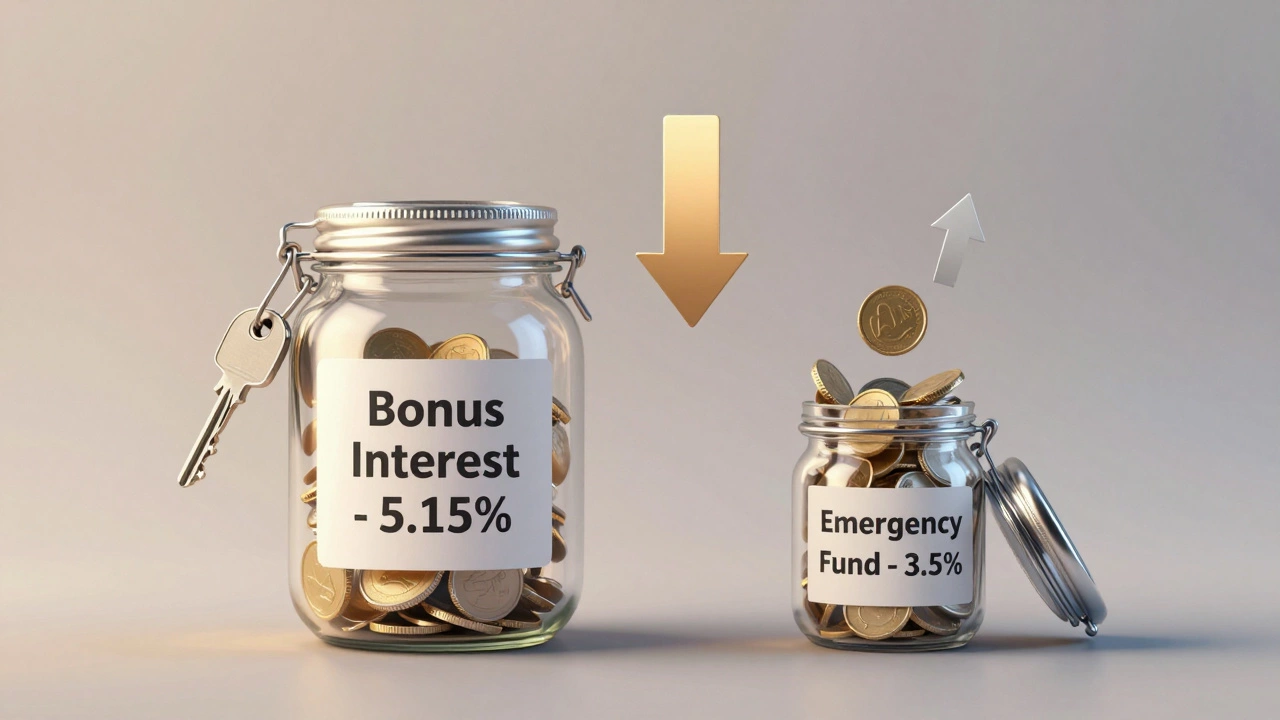
In Australia, most savings accounts don’t charge fees just for withdrawing money. But there’s a catch: many accounts have withdrawal limits. If you go over them, you lose the high interest rate.For instance, a popular account might offer 5.15% p.a. if you make no more than one withdrawal per month. If you make two, the rate drops to 0.1%-a 98% cut. That’s not a fee. It’s a contract. You agreed to the rules when you opened the account.
Check your product disclosure statement (PDS). Look for terms like:
- “Bonus interest conditional on no withdrawals”
- “Maximum one transaction per month”
- “Interest rate reverts to standard rate after withdrawal”
These aren’t penalties-they’re trade-offs. You get a better rate in exchange for limited access.
What happens if you withdraw too often?
If you break the rules on a bonus interest account, you don’t get kicked out. You don’t lose your money. But you lose the high interest rate-often permanently for that month, sometimes for the rest of the year.Here’s a real example from a major Australian bank in 2025:
| Account Type | Bonus Rate | Standard Rate | Withdrawal Limit | Consequence of Exceeding Limit |
|---|---|---|---|---|
| High-Interest Savings | 5.15% | 0.15% | 1 per month | Rate drops to 0.15% for the month |
| Online Savings Max | 4.90% | 0.20% | 2 per month | Rate drops to 0.20% for the month |
| Basic Savings | 3.50% | 3.50% | Unlimited | No change |
Notice the difference? If you need to access your money more than once a month, a bonus account isn’t right for you. You’re better off with a standard account that doesn’t restrict withdrawals.
Is there a better way to manage withdrawals?
Yes. Split your savings. Keep most of your money in a high-interest account with strict rules, and move a small amount-say, $1,000-to a separate, no-strings-attached savings account for emergencies.Here’s how it works:
- Open two savings accounts: one bonus, one basic.
- Put 90% of your savings in the bonus account.
- Keep $1,000-$2,000 in the basic account for unplanned spending.
- When you need cash, use the basic account first.
- Replenish the basic account when you can, without touching the bonus account.
This way, you keep your high interest intact while still having flexible access. It’s the strategy used by thousands of Australians who want to grow their savings without locking themselves in.
What about direct debits and transfers?
Some accounts count transfers to linked accounts as withdrawals. Others don’t. This is where people get tripped up.For example, if you set up a direct debit from your bonus savings account to pay your electricity bill, some banks treat that as a withdrawal. Others only count manual transfers or ATM withdrawals.
Always check: does the bank define “transaction” as any movement of money, or just customer-initiated withdrawals? If you’re unsure, call your bank and ask: “Does transferring money to my everyday account count toward my monthly withdrawal limit?”
Many people think they’re being smart by automating payments from their savings-only to find their interest rate slashed. Don’t assume. Confirm.

Can you get the bonus rate back after a withdrawal?
Usually, yes-but only for the next month. Most banks reset the withdrawal count on the first day of each month. So if you broke the rule on the 10th, you can still earn the bonus rate again on the 1st of next month.Some banks, especially newer digital ones like UBank or ING, let you earn bonus interest even after a withdrawal, as long as you make a deposit that same month. Others are stricter.
Read the fine print. If the bank says “bonus interest is forfeited for the month,” that means you lose it for the whole calendar month-not just from the day you withdrew.
What if you need to withdraw more than once?
If you’re someone who regularly needs to access savings-maybe you pay for childcare, gym memberships, or car maintenance from your savings account-you’re better off choosing a savings account with no withdrawal limits.There’s no shame in that. The goal of a savings account isn’t to be a vault. It’s to earn more than your everyday account. A 3.5% account with unlimited access is better than a 5% account you can’t use without penalty.
Compare the real return. Let’s say you have $10,000:
- 5.15% account with 1 withdrawal limit: you withdraw twice → rate drops to 0.15% → you earn $15/year
- 3.5% account with no limits: you withdraw as needed → earn $350/year
Even with two withdrawals, you make 23x more interest with the no-limit account. The bonus rate only wins if you leave your money alone.
Final tip: Track your withdrawals
Set a calendar reminder. Every time you withdraw from a bonus account, note the date. If you’re close to your limit, pause. Wait until next month. Or move the money from your emergency fund instead.Most people don’t realize how much they’re losing until they see the numbers. One withdrawal can cost you hundreds in lost interest over a year. That’s not a small thing.
It’s not about never touching your savings. It’s about being intentional. Know the rules. Plan ahead. And choose the account that fits your life-not the one with the flashiest headline rate.
Do I lose interest if I withdraw from a savings account?
No, you don’t lose interest you’ve already earned. But if you withdraw from a bonus interest account and break the rules (like exceeding monthly limits), you’ll lose the high interest rate going forward. Your existing interest stays, but future earnings drop.
Can a bank take back interest I’ve already earned?
No. Australian banks cannot take back interest that’s already been paid to your account. What they can do is reduce your future interest rate if you break the terms of a bonus savings account.
Do all savings accounts have withdrawal limits?
No. Only bonus interest accounts do. Basic savings accounts let you withdraw as often as you want without affecting your interest rate. Check your account’s Product Disclosure Statement to see if your account has limits.
Is it better to have a high-interest account with limits or a lower-rate account with no limits?
It depends on how often you need to access your money. If you withdraw more than once a month, a lower-rate account with no limits will likely earn you more in the long run. The higher rate only pays off if you leave your money untouched.
What counts as a withdrawal in a savings account?
It varies by bank. Some count transfers to your everyday account as withdrawals. Others only count ATM withdrawals or manual transfers. Always check the bank’s definition of a transaction in their terms. Never assume.