

Car Loan Term Calculator: 60 vs 72 Months
Loan Details
Comparison Results
See how an extra year affects your wallet
60-Month Loan
72-Month Loan
The Real Cost Difference
You just found the perfect car. It fits your budget, it has the features you want, and the dealership offers you a monthly payment that feels manageable. But there’s a catch: to get that low number, they’re stretching the loan out to 72 months-or even longer. Before you sign on the dotted line, you need to ask yourself a hard question: is a 72-month car loan bad?
The short answer is yes, usually. While it might save you money each month, it often costs you significantly more over time. You risk paying thousands in extra interest, driving an "upside-down" car where you owe more than it’s worth, and being stuck with a vehicle that falls apart before you’ve paid for it. Let’s break down exactly why extending your loan term is a financial trap and what you should do instead you can do to buy a car without wrecking your wallet.
The Illusion of Affordability
Dealerships love long-term loans because they make cars seem affordable. When you stretch a $30,000 loan over 60 months (5 years) versus 72 months (6 years), the monthly difference looks small-maybe $100 or so. That $100 sounds like nothing. It’s less than a nice dinner out. So, you think, "Why not take the lower payment?"
But here is the math reality check. Interest compounds over time. By adding those extra 12 months, you aren’t just paying interest on the principal; you are paying interest on the interest you accumulated in the first five years. On a typical auto loan rate of around 6% to 8%, that extra year can cost you hundreds, sometimes over a thousand dollars, in pure interest payments. You are essentially renting the last two years of your car from the bank at a premium.
Consider this scenario: You borrow $25,000. At 7% interest:
- A 60-month loan costs you about $4,900 in total interest.
- A 72-month loan costs you about $6,100 in total interest.
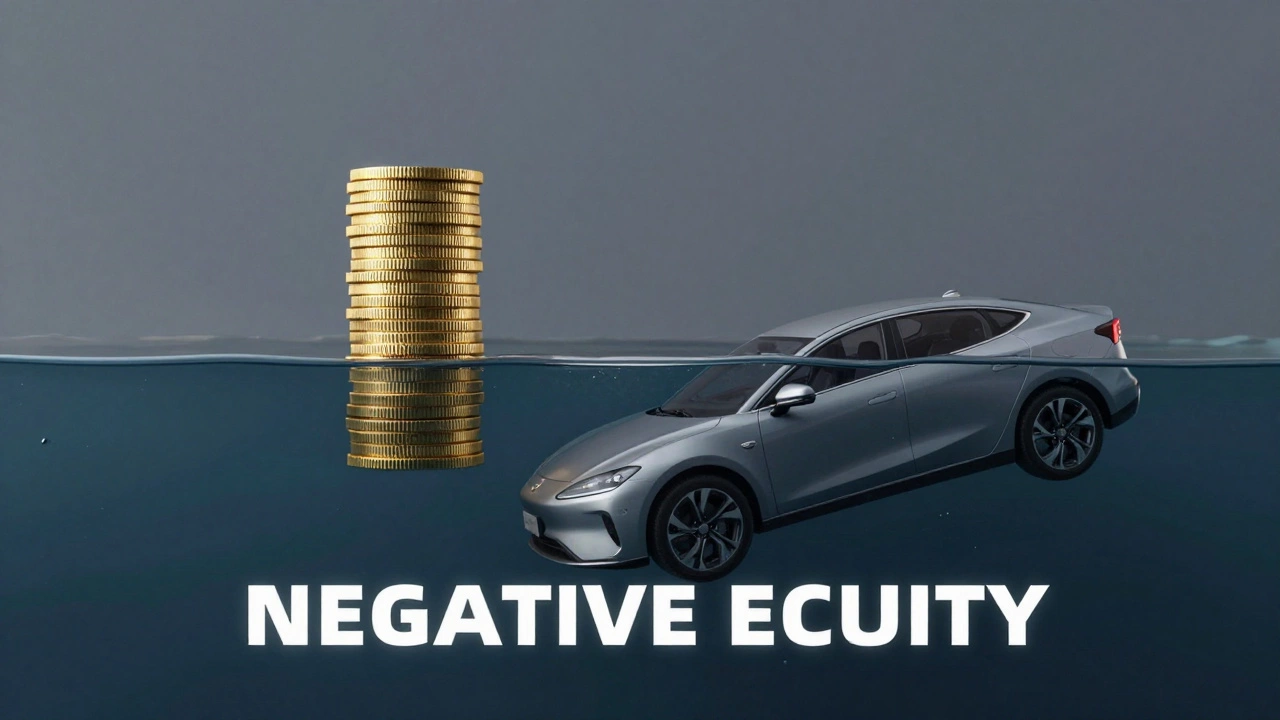
The Danger of Negative Equity
Perhaps the biggest risk of a 72 month car loan isn't the interest-it's depreciation. Cars lose value fast. A new car can drop 20% of its value the moment you drive it off the lot. Over six years, a vehicle typically loses 50% to 60% of its original price.
When you have a shorter loan term, you pay down the principal faster. With a 72-month loan, the balance decreases slowly. For the first few years, you are mostly paying interest, not principal. This creates a dangerous gap between what you owe the bank and what the car is actually worth.
This state is called "negative equity" or being "upside-down." If you owe $20,000 on a car that is only worth $15,000, you are underwater. Why does this matter? Because life happens. If you get into an accident and the car is totaled, insurance will only pay you the current market value ($15,000). You still owe the bank the remaining $5,000. You now have no car and a debt hanging over your head. Worse, if you need to sell the car to switch jobs or move cities, you cannot simply sell it. You have to bring cash to the table to cover the difference, or roll that debt into your next car loan, which starts a vicious cycle of debt that can be nearly impossible to escape.
| Factor | 60-Month Loan | 72-Month Loan |
|---|---|---|
| Total Interest Paid | Lower | Higher (often by 20-30%) |
| Monthly Payment | Higher | Lower |
| Risk of Negative Equity | Low to Moderate | High |
| Vehicle Condition at Payoff | Good (lower mileage) | Fair/Poor (higher mileage) |
| Flexibility to Sell/Trade | High | Low (likely upside-down) |
The Maintenance Trap
There is another hidden cost to keeping a car for six or seven years while paying for it: repairs. Most manufacturer warranties cover three years or 36,000 miles. Extended warranties exist, but they add to the upfront cost. Once you pass the 60,000-mile mark-which happens quickly in a 72-month timeline-major components start failing.
Imagine paying off your car in month 72, only to face a $1,500 transmission repair or a $1,000 timing belt job in month 73. You are now making payments on a car that is no longer reliable. You didn’t save money; you just delayed the inevitable expense while adding interest on top of it. A 60-month loan ensures you own the car outright while it is still relatively young and under warranty for most of its life. A 72-month loan often means you are financing a car that is becoming a lemon right as you finish paying for it.
Who Should Consider a Longer Term?
Are 72-month loans ever okay? There are rare exceptions. If you are buying a high-quality used car with a proven reliability record and a low interest rate (under 4%), a longer term might help you fit the payment into a tight budget without going upside-down, since the car has already taken its biggest depreciation hit. However, for new cars, the risks almost always outweigh the benefits.
If you find yourself needing a 72-month loan to afford a new car, the real issue isn’t the loan term-it’s the price of the car. You are likely buying a vehicle that is too expensive for your current income level. The solution isn’t to stretch the loan; it’s to look at a cheaper car.

How to Avoid the Long-Term Loan Trap
So, how do you buy a car without signing up for six years of debt? Here are practical steps to keep your finances healthy:
- Set a Hard Budget Limit: Financial experts often suggest spending no more than 10-15% of your annual take-home pay on a car. Stick to this number, regardless of what the dealer says you qualify for.
- Get Pre-Approved: Go to your credit union or bank before visiting the dealership. Know your interest rate and maximum loan amount. This prevents dealers from manipulating the term length to hide a higher price.
- Choose a Shorter Term: Aim for 48 or 60 months. If you can’t afford the monthly payment on a 60-month term, the car is too expensive. Period.
- Put More Money Down: A larger down payment reduces the principal amount you need to borrow. This lowers your monthly payment and helps you avoid negative equity immediately.
- Consider Used: Buying a one- to three-year-old car allows someone else to take the initial depreciation hit. You can often get a reliable vehicle for a fraction of the new price, allowing you to pay it off in 36 to 48 months.
What If You Already Have a 72-Month Loan?
If you’ve already signed the papers, don’t panic. You can still mitigate the damage. First, try to make extra principal payments whenever possible. Even an extra $20 a month can shave months off the end of the loan and reduce interest costs. Second, monitor your car’s value using tools like Kelley Blue Book or Edmunds. If you notice you are getting close to being upside-down, stop trading in cars and hold onto this one until the balance drops below the market value. Finally, maintain the car meticulously. Higher resale value means less loss if you eventually need to sell it.
Is it better to have a 60-month or 72-month car loan?
A 60-month loan is generally better. It saves you significant money in interest and reduces the risk of being upside-down on your car. A 72-month loan extends the period where you owe more than the car is worth, increasing financial vulnerability.
Can I refinance a 72-month car loan to a shorter term?
Yes, if your credit score has improved or interest rates have dropped, you may be able to refinance. However, refinancing to a shorter term will increase your monthly payment. Ensure you can afford the higher payment before proceeding.
What is negative equity in a car loan?
Negative equity occurs when you owe more on your car loan than the vehicle is currently worth. This is common with long-term loans like 72 months because the car depreciates faster than the loan balance decreases.
How much extra interest do I pay with a 72-month loan?
It depends on the interest rate and loan amount, but typically you will pay 20% to 30% more in total interest compared to a 60-month loan. On a $25,000 loan, this could mean an extra $1,000 to $1,500 in costs.
Should I buy a new car with a 72-month loan?
It is rarely advisable. New cars depreciate rapidly, making 72-month loans high-risk for negative equity. If you need a 72-month term to afford a new car, consider buying a less expensive new model or a certified pre-owned vehicle instead.